
How it works · 8 min read
Can you reglaze a bathtub twice? Yes, but not the easy way
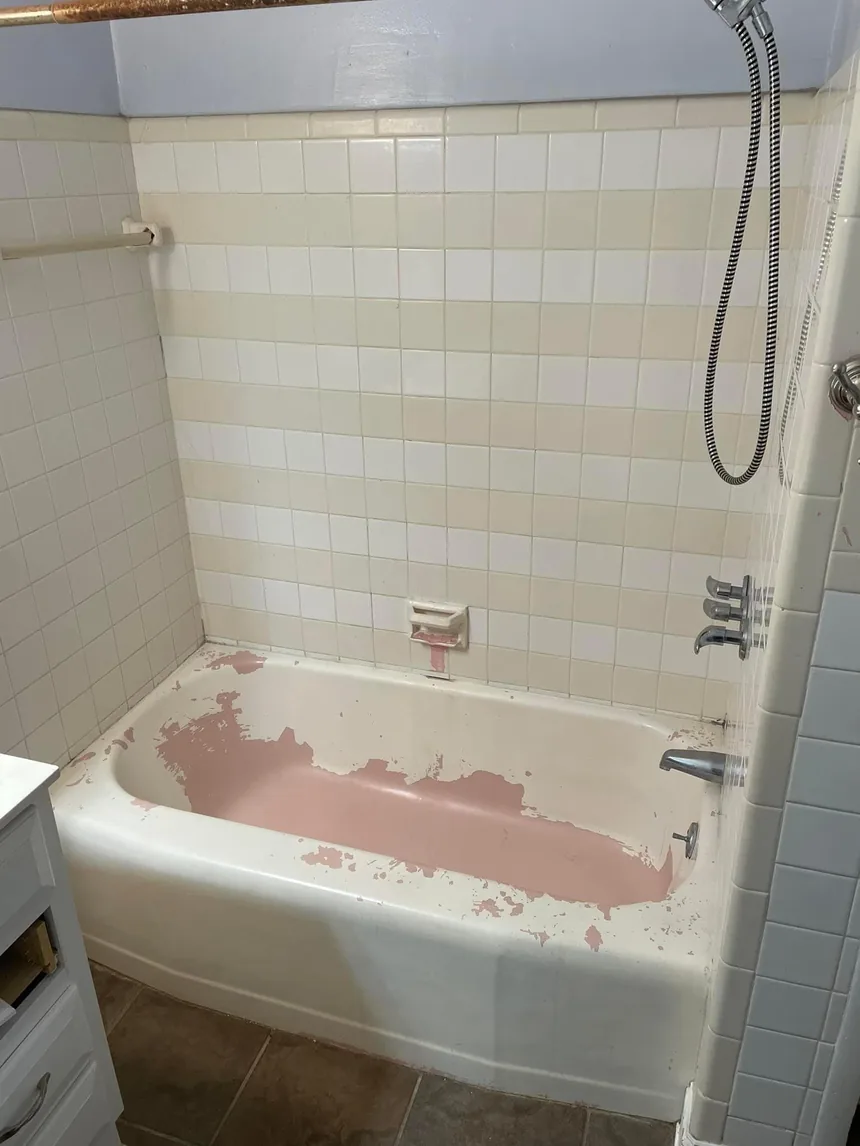
Yes. A tub that has been refinished before can be refinished again, and we do it regularly — it is one of the most common jobs in a city with housing as old as this one, because a lot of tubs here are on their second or third owner and their second coating.
What you cannot do is treat it as though it were an original surface. Nearly every failed refinishing job we are called to fix is a coating that was sprayed straight onto an older coating by somebody who either did not know or did not ask.
Why the old coating is the whole problem
Refinishing works by bonding to the surface underneath. On an original tub, that surface is porcelain or gelcoat — hard, stable, and something that can be etched to give the new coating a key.
An old coating is none of those things. It is a layer that is already releasing from what is beneath it, in places you cannot see. Spray a new coating onto it and you have built on a foundation that is letting go. The new layer can be perfect and it will still come away, because it takes the old one with it when it goes — usually in sheets, usually within a year, and usually starting at the floor of the tub where the weight is.
That is why a tub that was refinished badly looks fine for months and then fails all at once. The bond was never there; it just had not been tested yet.
How to tell whether yours has been done before
Owners frequently do not know, especially in a house or unit they bought. Four things to look for:
- A chip that shows white over color. The giveaway. If you can see a thin white layer with pink, green, blue or yellow underneath it, you are looking at a coating over the original glaze.
- The overflow plate and the drain. On an original tub the glaze runs cleanly to the metal. On a refinished one you will often find a slightly thick, soft edge where the coating stopped, or an overspray line behind the plate.
- A sheen that does not match the tile. Original glaze and original tile age at the same rate. A tub that is noticeably glossier or flatter than the surround it sits in has usually been redone.
- Soft, rounded corners where there should be crisp ones, and caulk that looks like it has been painted over rather than replaced.
If you find any of them, you have useful information, and it belongs in the first conversation with anyone quoting you.
What the job actually involves
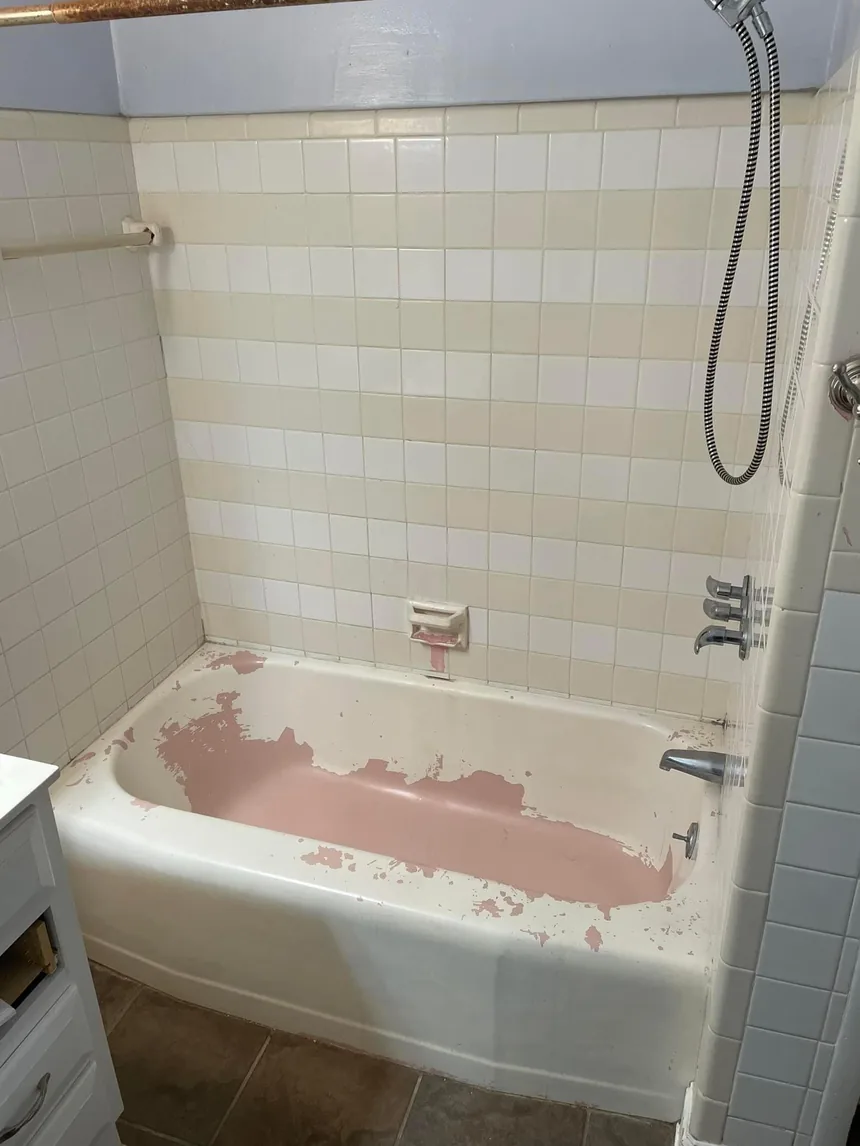
It is the same work as a first-time refinish with one large step added at the front: the old coating has to come off.
That is mechanical. Stripping, sanding, or both, until what is left is the original surface — and the original surface is the thing the new coating will bond to. It is slow, it is the least pleasant part of the job, and it is the part that gets skipped by anyone competing on price.
Once it is off, everything proceeds as normal: damage repaired, surface etched, coating sprayed, one visit, twenty-four hours before it is used. The result is not a worse finish than a first-time job. A tub stripped properly and recoated is in exactly the same position as one that was never touched.
Three questions worth asking
If you know your tub has been coated before, these three answers tell you almost everything about who you are talking to.
- "What will you do about the existing coating?" The answer you want involves removing it. An answer about bonding primers or a special adhesion promoter that goes over the top is an answer about saving labor.
- "Does that change the price or the time?" It should change both. A company that quotes the same for a stripped tub as a virgin one is not planning to strip it.
- "What happens if it fails?" Our residential work carries a five-year written warranty, and it covers the work — including the finish letting go because it did not bond. What it does not cover is damage caused by someone or something after the fact. Knowing which is which before you sign is the point.
There is a longer list of questions worth asking any refinisher, and the second one on it is this exact subject, for the same reason.
Is there a limit?
In practice the limit is not how many times it has been coated but what state the original surface is in once you get back down to it. On cast iron there is usually plenty left — the porcelain is thick and the shell is effectively permanent. On a thin steel tub that has been stripped and recoated more than once, or where rust has been working underneath the whole time, there may not be enough sound surface left to be worth it.
We will tell you when that is the case. It costs us the job, which is precisely why it is worth hearing.
The one-line version
Twice is fine. Twice without stripping the first one is the single most reliable way to buy a finish that peels. If somebody quotes you to spray over what is already there, that quote is cheap for a reason.