
How it works · 7 min read
Why bathtub refinishing peels — and how to make sure yours doesn't
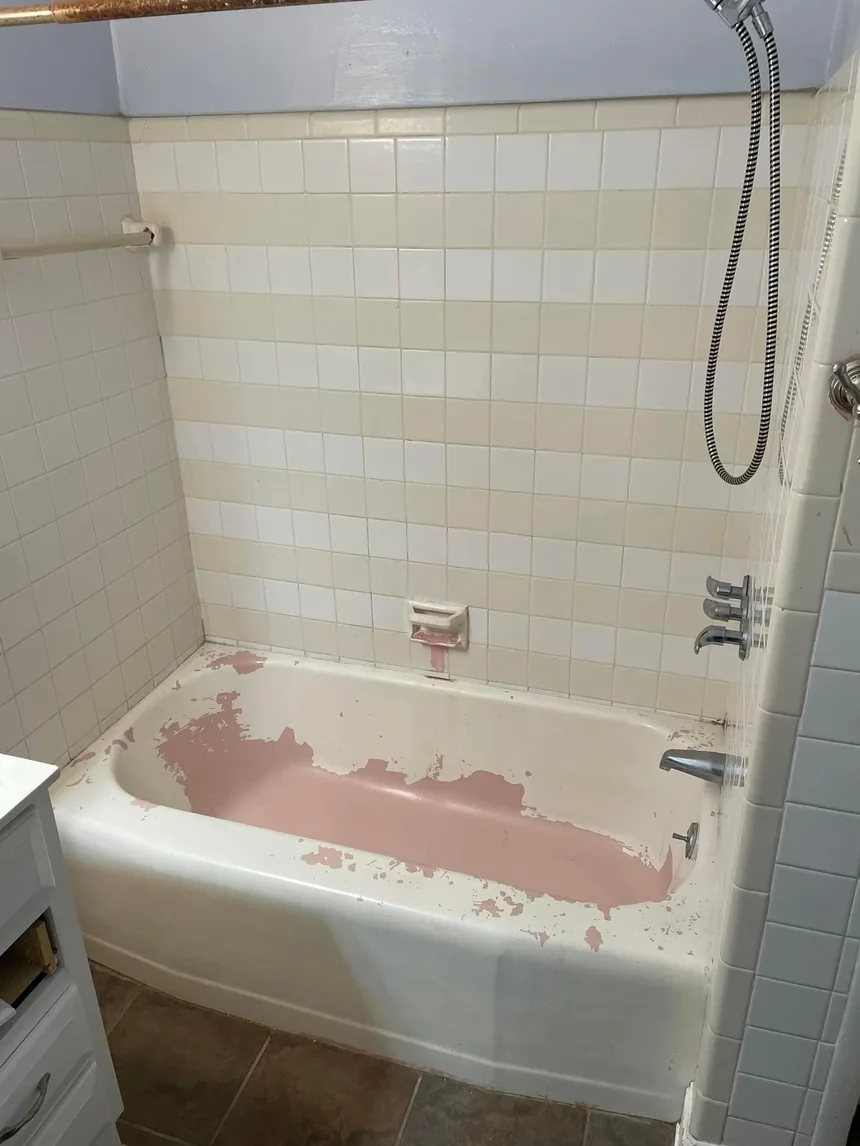 Before
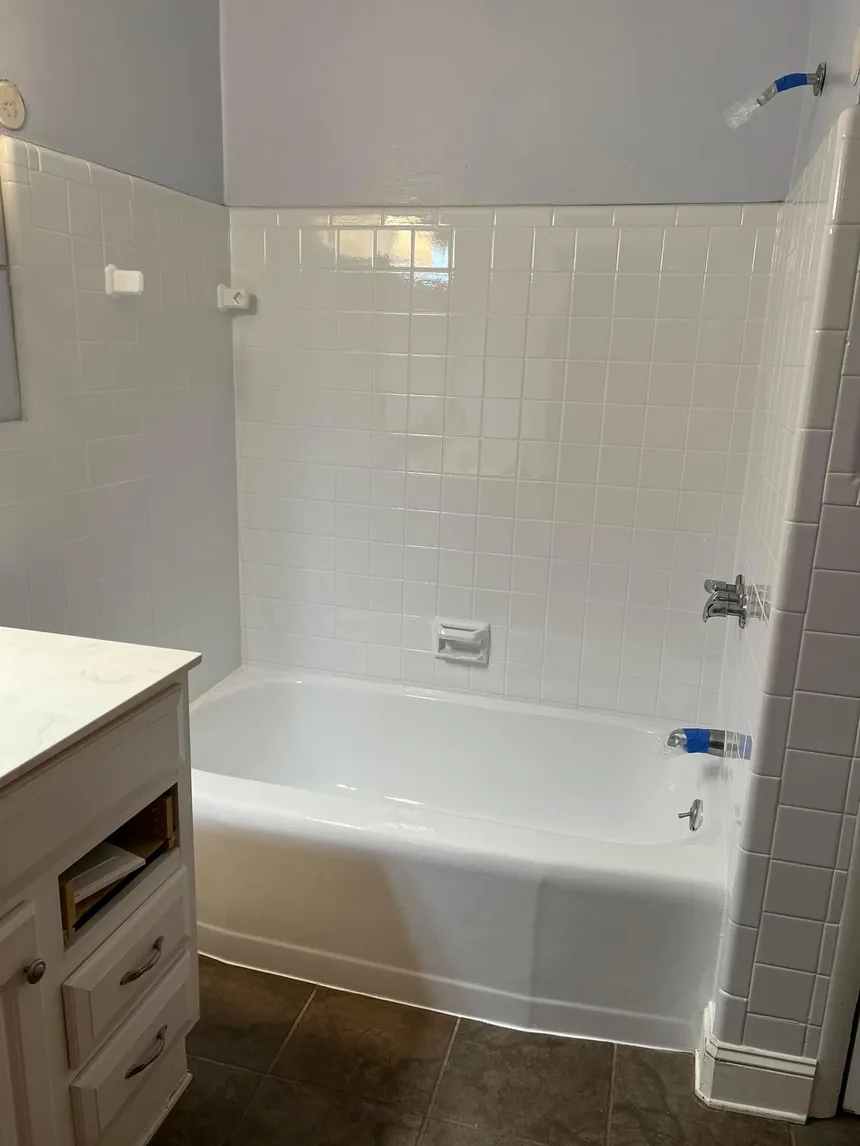 After
After
Search for bathtub refinishing and you'll find horror stories: finishes that bubbled within a month, peeled off in sheets, or came away in someone's hand. Those stories are real, and they're the main reason people hesitate before booking.
They're also almost entirely avoidable, and they nearly always have the same cause.
The short version
A refinished surface is a layer bonded to your tub. Peeling is a bond failure. The coating didn't go wrong — it never properly attached in the first place, and then time and water did what time and water do.
Nobody has ever fixed a bond failure by applying more coating. The bond is made before the gun comes out.
The five ways a bond gets ruined
1. The surface wasn't clean enough
"Clean" here doesn't mean what it means on a Saturday morning. A tub that has been used for thirty years holds soap residue, body oils, hard water minerals and the residue of every cleaning product ever used on it. Much of that has soaked into a glaze that's gone porous.
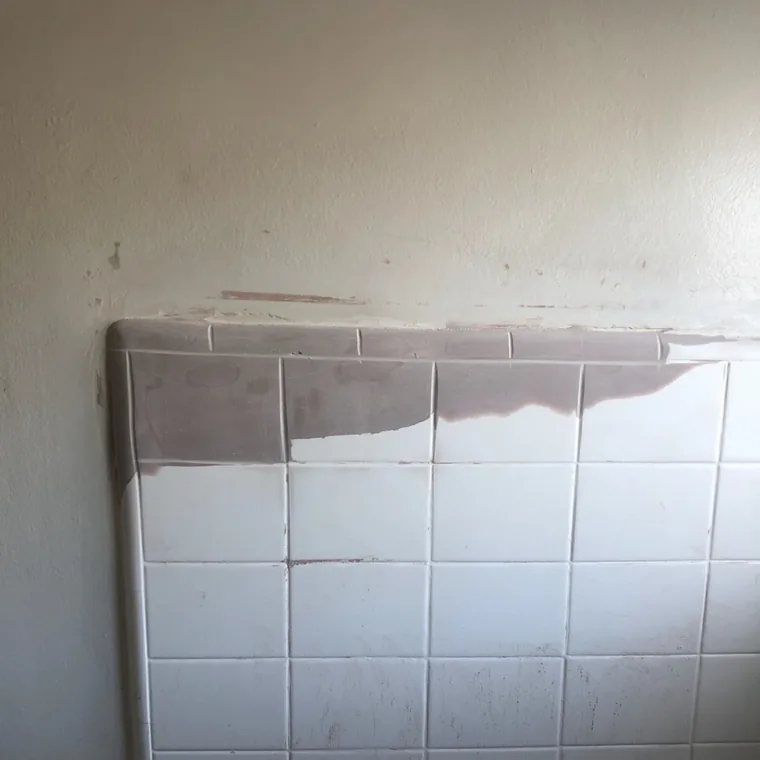
Coating over any of it is like painting over grease. It'll look fine and it will not hold.
2. Silicone contamination
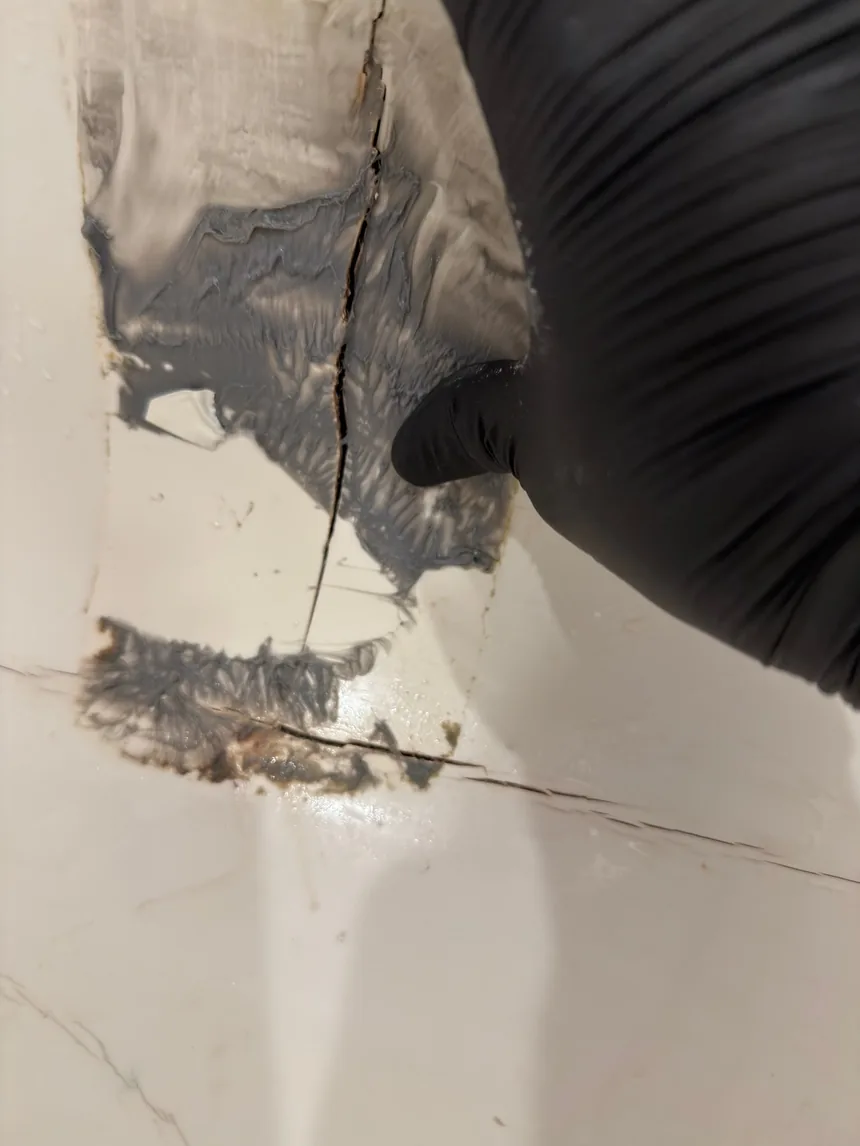
This one is specific and it's brutal. Silicone — from old caulk, from certain cleaning and polishing products — spreads invisibly across a surface and prevents anything from bonding to it. Even a trace is enough, and it produces small circular craters, or an area that lifts cleanly while everything around it holds.
Old caulk has to be removed and the area dealt with properly, not sprayed over.
3. The surface wasn't etched or abraded
Original tub glaze is hard, smooth and sealed — it's designed so nothing sticks to it. That's excellent for a bathtub and terrible for a coating.
The surface has to be given a profile for the new finish to key into, either chemically or mechanically. Skip it and you have a hard smooth layer sitting on a hard smooth layer, held together by hope.
Cast iron is the least forgiving here, because its enamel is the thickest and hardest of the lot. We go into that on refinishing a cast iron bathtub.
4. There was already a coating on it
If someone refinished the tub before, the new finish is being applied to the old finish, not to the tub. It inherits every weakness the old one had — and if the old one was already failing, the new one is being glued to something that's letting go.
An existing coating has to come off first. That's real extra work, which is exactly why it's the thing most often skipped, and why it's the thing you should mention when you ask for a quote. Finding it on the day leaves only bad options.
5. Rust was covered instead of removed
Rust doesn't stop because it's dark. If a chip down to the metal is filled without cutting back to sound material, corrosion continues underneath and eventually lifts the finish from below. You'll see it as a brown shadow spreading under the surface, usually near the drain or the overflow.
The honorable mention: moisture and ventilation
A curing finish doesn't like a damp, unventilated room. Bathrooms near the coast — Santa Monica, Long Beach, Huntington Beach — often have poor ventilation and permanently high humidity, and that's worth mentioning to whoever is doing the work.
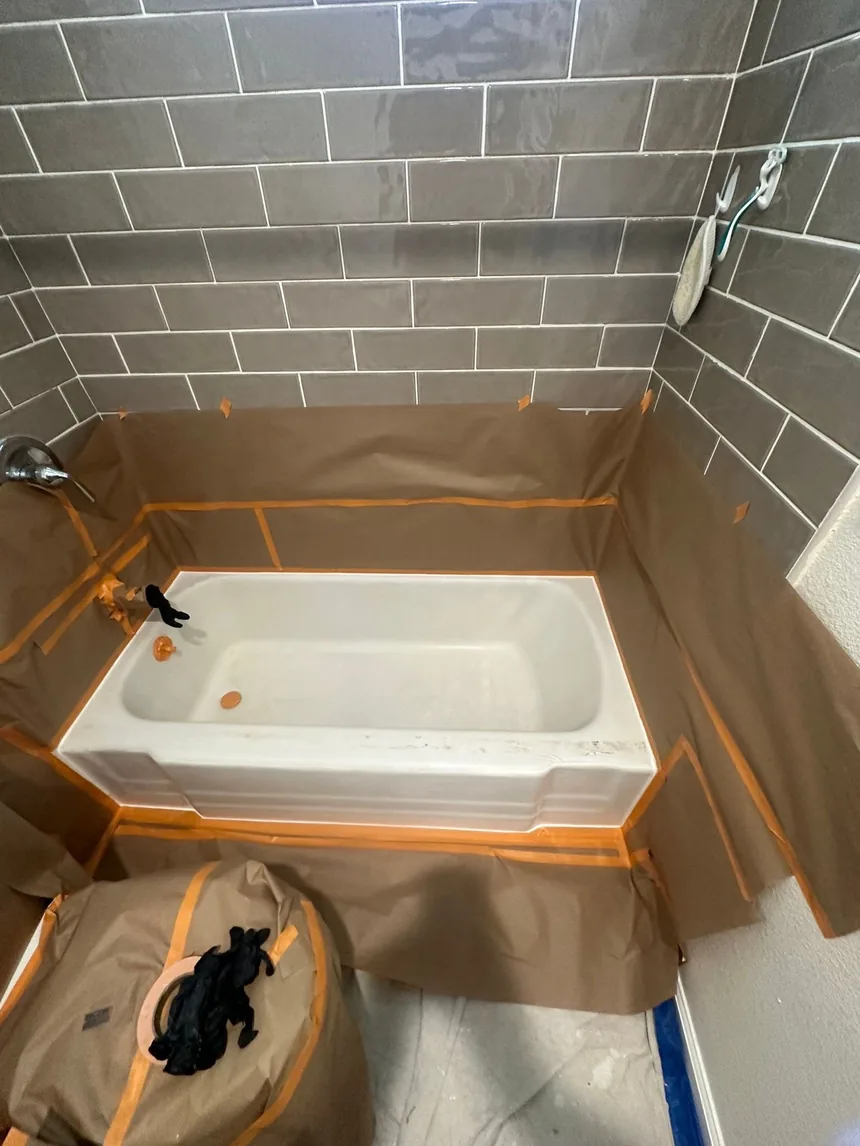
How to tell, before you book, whether you're hiring the problem
You can't inspect a bond. But you can listen to how someone talks about preparation, and it's remarkably revealing. Ask:
- "What do you do to the surface before you spray?" A good answer is detailed and mentions cleaning, etching or abrading, and repairs. A vague answer is a vague job.
- "My tub has been refinished before — what does that change?" The right answer is that it has to come off, and that it costs more. Anyone who says it makes no difference is planning to spray over it.
- "How long will you actually be here?" Preparation takes longer than spraying. If the whole visit sounds like it's over in an hour, most of it isn't happening.
- "What happens if it fails?" Not a trick question. You're listening for whether they've thought about it.
There's a fuller list in questions to ask before you hire a refinisher.
If yours is already peeling
It can be fixed, and the fix is not to patch it. The failed coating has to be stripped back, the surface prepared properly, and the tub refinished from there.
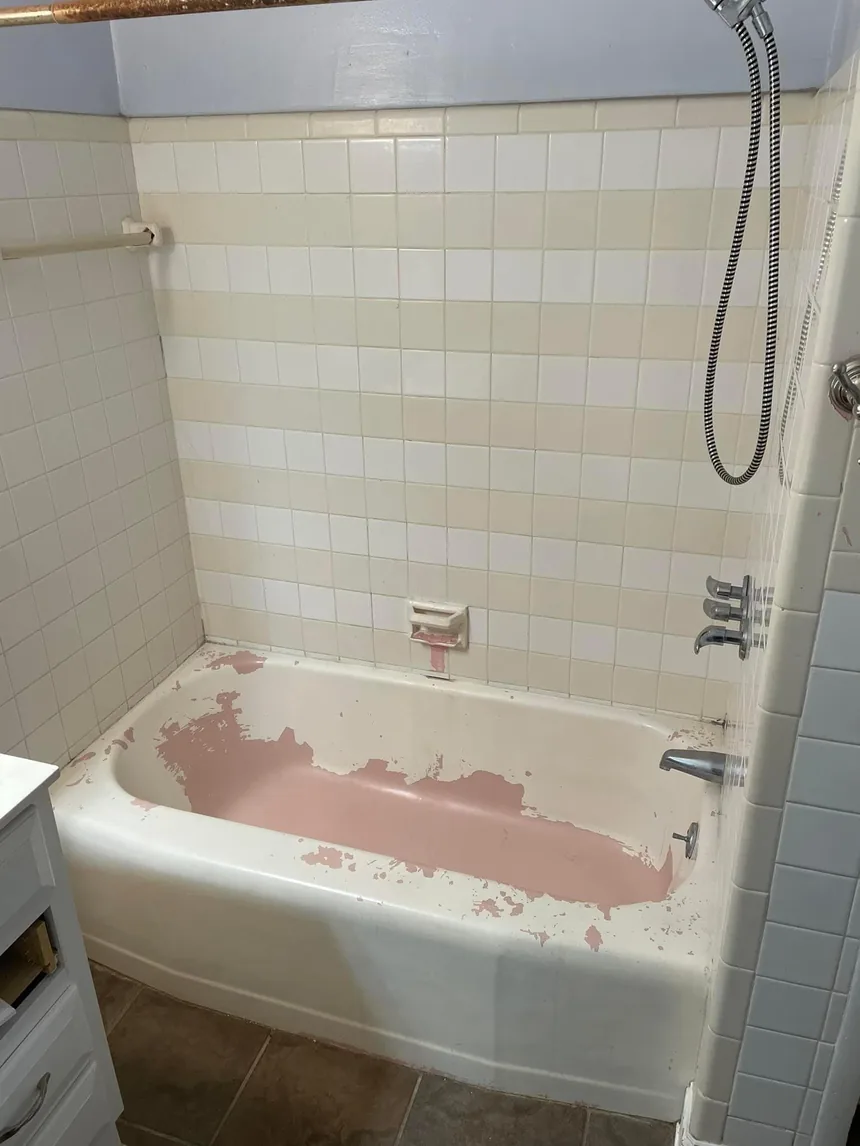
Two things to know. First, it will cost more than a first-time job, because stripping is work. Second, don't let anyone spray over it — you will be paying for the same failure a second time, with an extra layer involved.
Tell us it's been done before when you call. It's the single most useful thing you can say, and it means the price you're quoted is the price it'll be.