
Bathtub refinishing
The tub is fine. It's the surface that's gone.
Rust rings, chips, a finish that won't come clean no matter what you scrub it with — that's the top layer failing, not the tub. We repair the damage and put a new surface on the tub you already have.
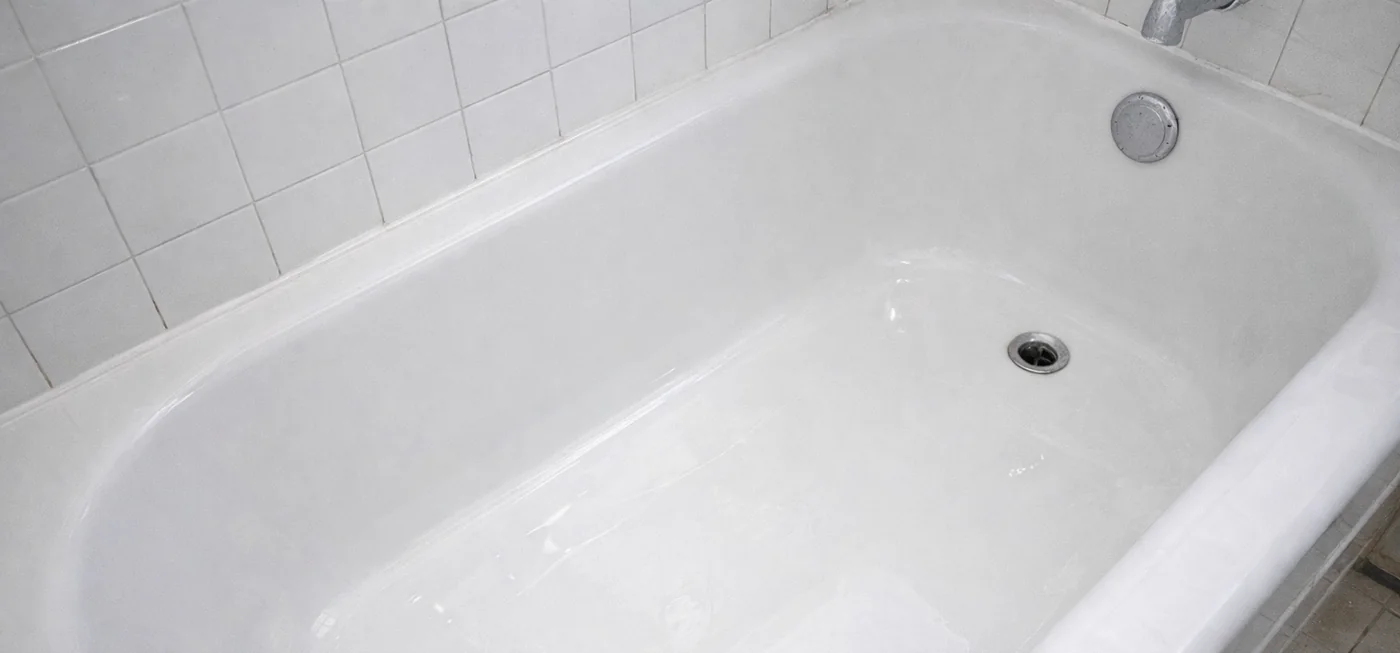
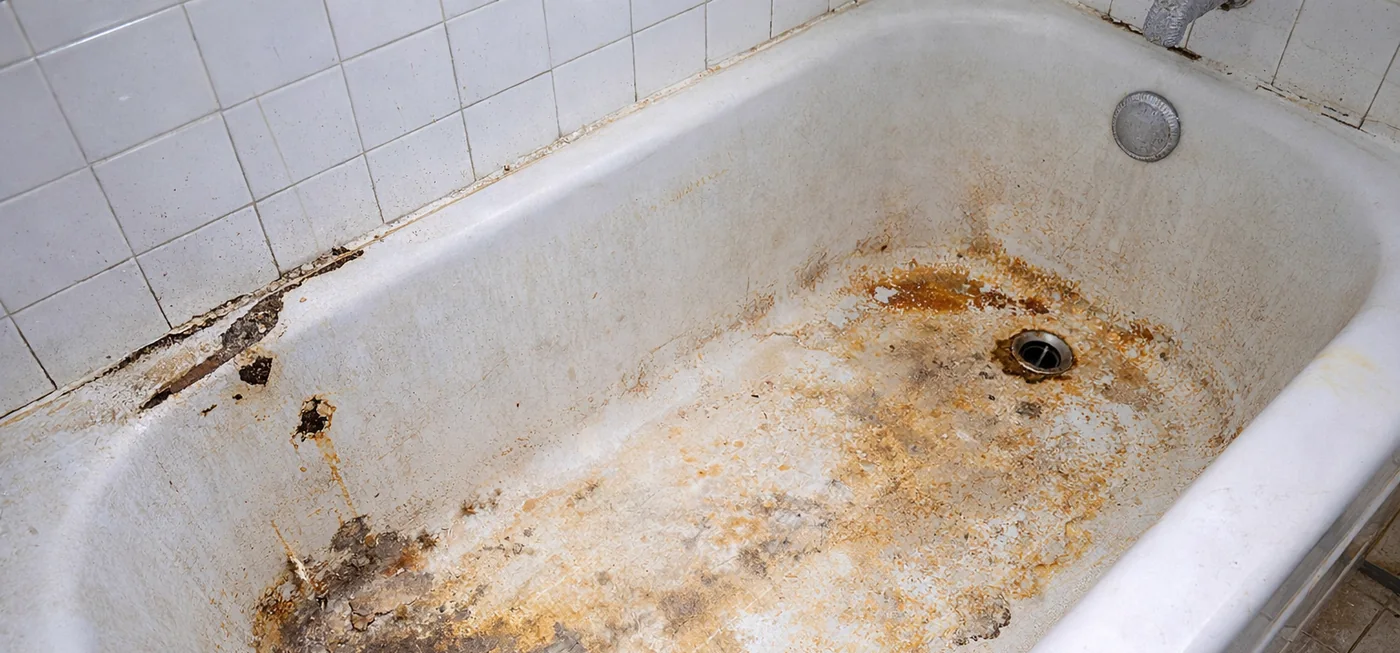
Three kinds of tub, three different jobs
Most tubs in Los Angeles homes are one of these. Each one fails in its own way, and each one gets prepped differently.
-
Porcelain over steel
The standard tub in most homes built before the eighties. The enamel chips where things get dropped, and once it chips the steel underneath starts to rust and stain outward. The rust has to be cut back and filled before anything goes over it.
-
Fiberglass and acrylic
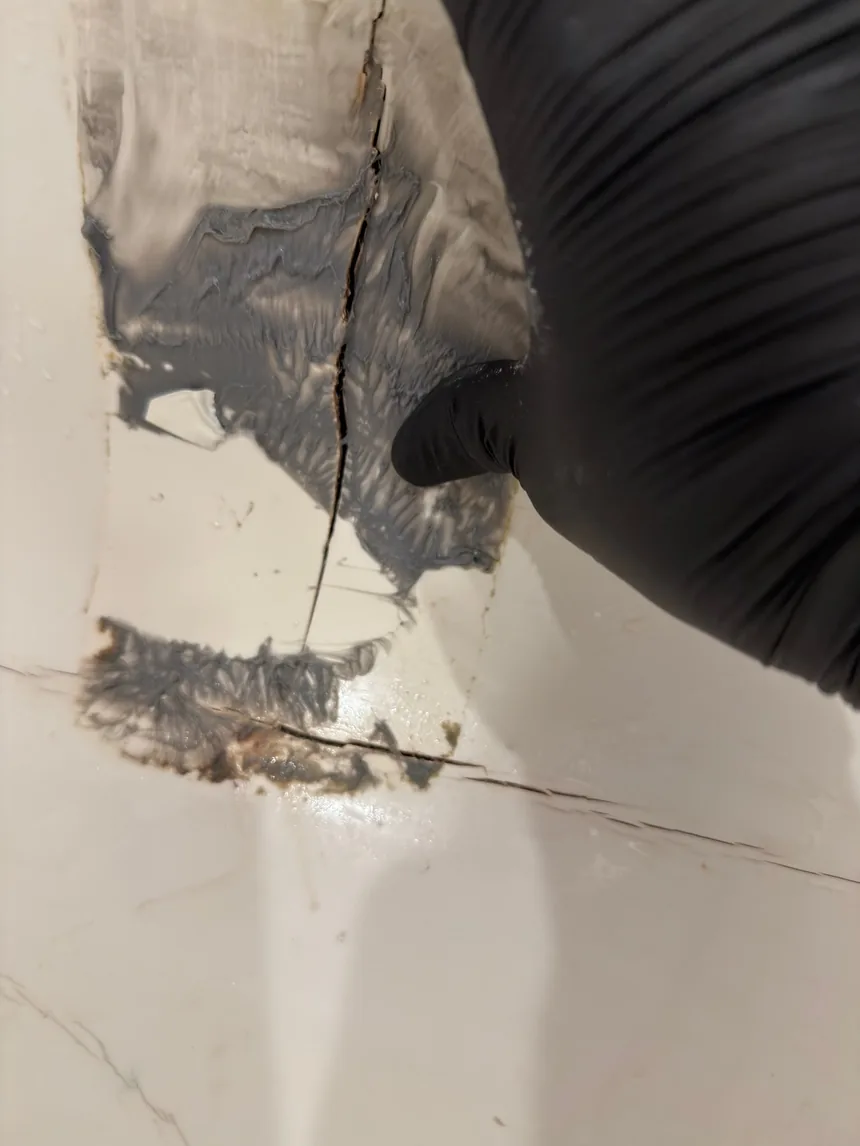
Lighter, newer, and prone to going dull and chalky rather than chipping. It also flexes, and old flex cracks show up as spidery lines around the drain. These get filled and the whole surface is sanded back before coating.
-
Cast iron
Heavy, old, and almost always worth saving — pulling one out usually means taking a wall or a doorway with it. The enamel is thick and hard, so the surface needs proper etching for the new finish to grip.
What refinishing actually fixes
People usually call us about one thing and then point at four more once we're standing in the bathroom. Nearly all of it is the same problem: the top layer has worn through, and everything the tub touches now sticks to it.
- Stains that don't come out. Once the glaze is worn, the surface is porous. You're not cleaning dirt off it anymore — you're cleaning dirt out of it.
- Rust around the drain and the overflow. Wherever water sits, the chip underneath keeps spreading.
- Chips and gouges. Filled and sanded flat, so the repair disappears instead of leaving a patch.
- A tub that has already been refinished badly. Peeling, bubbling, or a color that never matched. The old coating comes off first.
- The wrong color. Almond, bone, pale blue, pink — a bathroom can be in perfect shape and still look forty years old because of the tub.
What you get back is a hard, smooth, non-porous surface. The part that surprises most people isn't how it looks on day one — it's that it finally wipes clean again.
Refinish it, or tear it out?
Both are real options. They're just not the same size of project.
Refinishing What we do
- The work We come to you. The tub stays where it is.
- Your bathroom Masked off, worked on, and handed back.
- Plumbing Untouched. Nothing gets disconnected.
- Tile & walls Stay as they are — or get refinished too.
- Timing We tell you exactly when you can use it before we start.
Replacing
- The work Demolition, haul-away, plumbing, new tile.
- Your bathroom Out of use while several trades come through.
- Plumbing Disconnected and re-run. Old pipe is where surprises live.
- Tile & walls The surround usually comes off with the tub.
- Timing Days, and it depends on parts arriving.
When we'll tell you not to bother
Refinishing is a surface job. If the problem is underneath the surface, a new finish just buys you a few months. These are the cases where we say so on the estimate instead of taking the work:
- The tub is leaking A leak is a plumbing problem. Coating over it changes nothing.
- It moves or flexes underfoot If the tub isn't properly supported, a new finish will crack along with it.
- Rust has gone right through Once there's a hole, there's nothing left to bond to.
- You were going to remodel anyway If the tile and the layout are coming out too, put the money there.
Tubs we've brought back
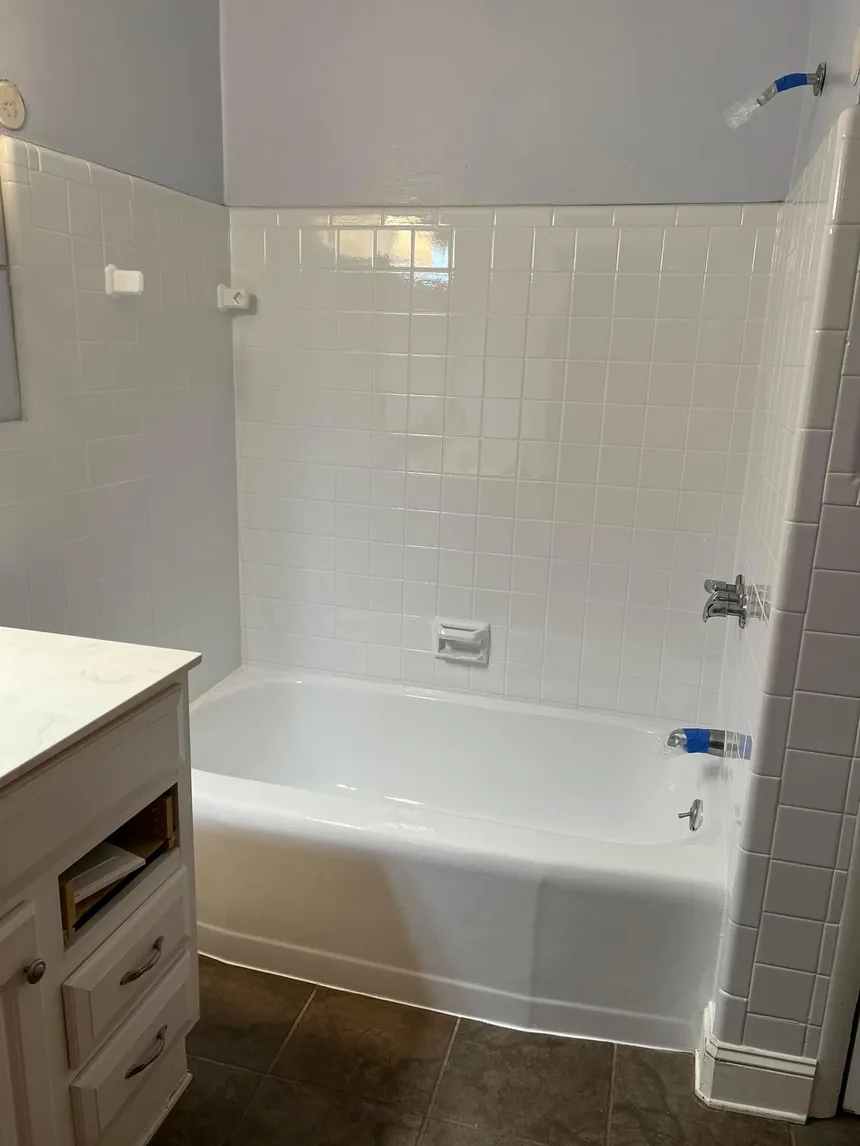
The same bathroom, before and after. No stock photos.
 Before
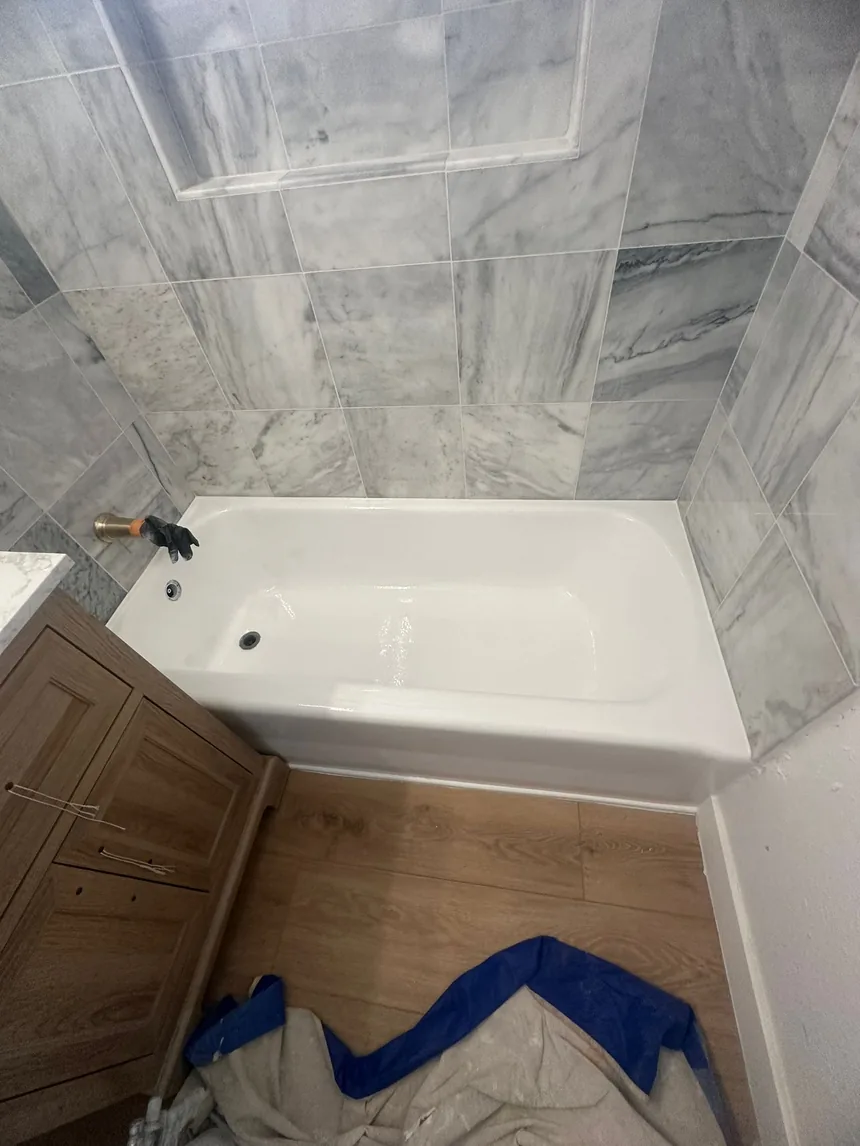 After
After
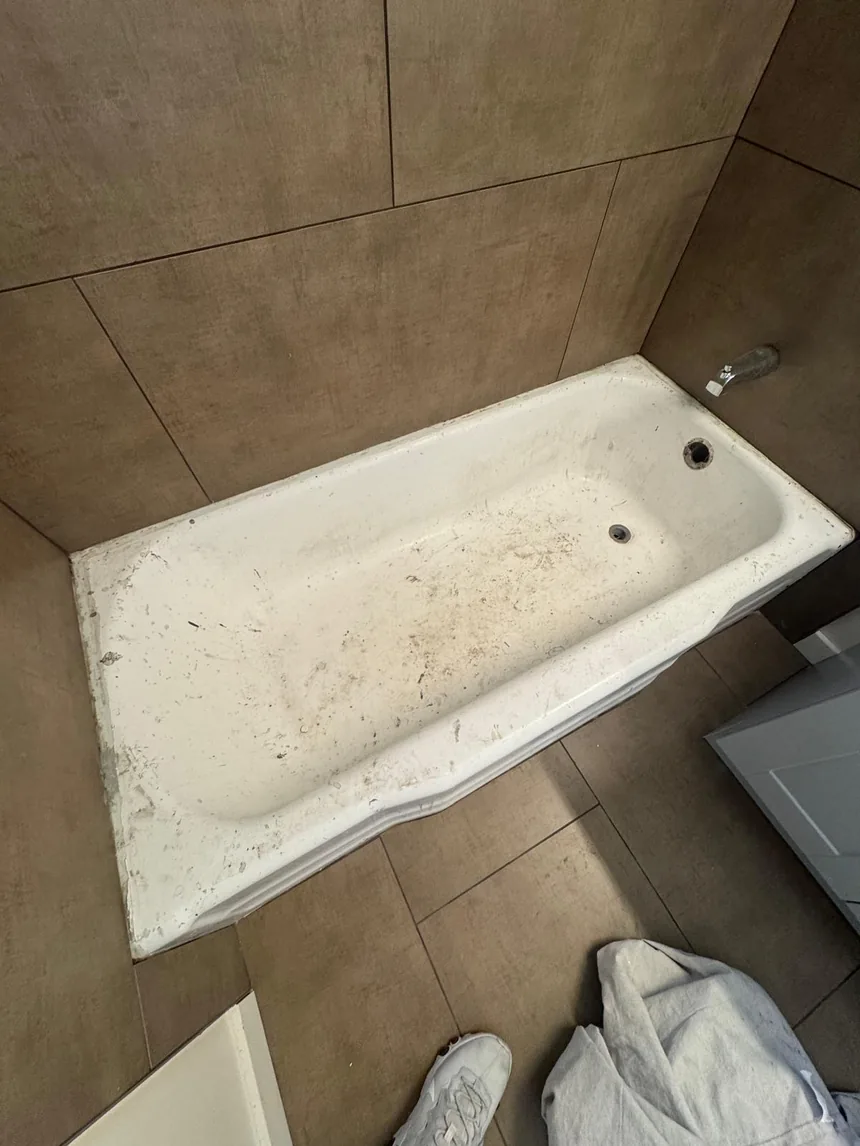 Before
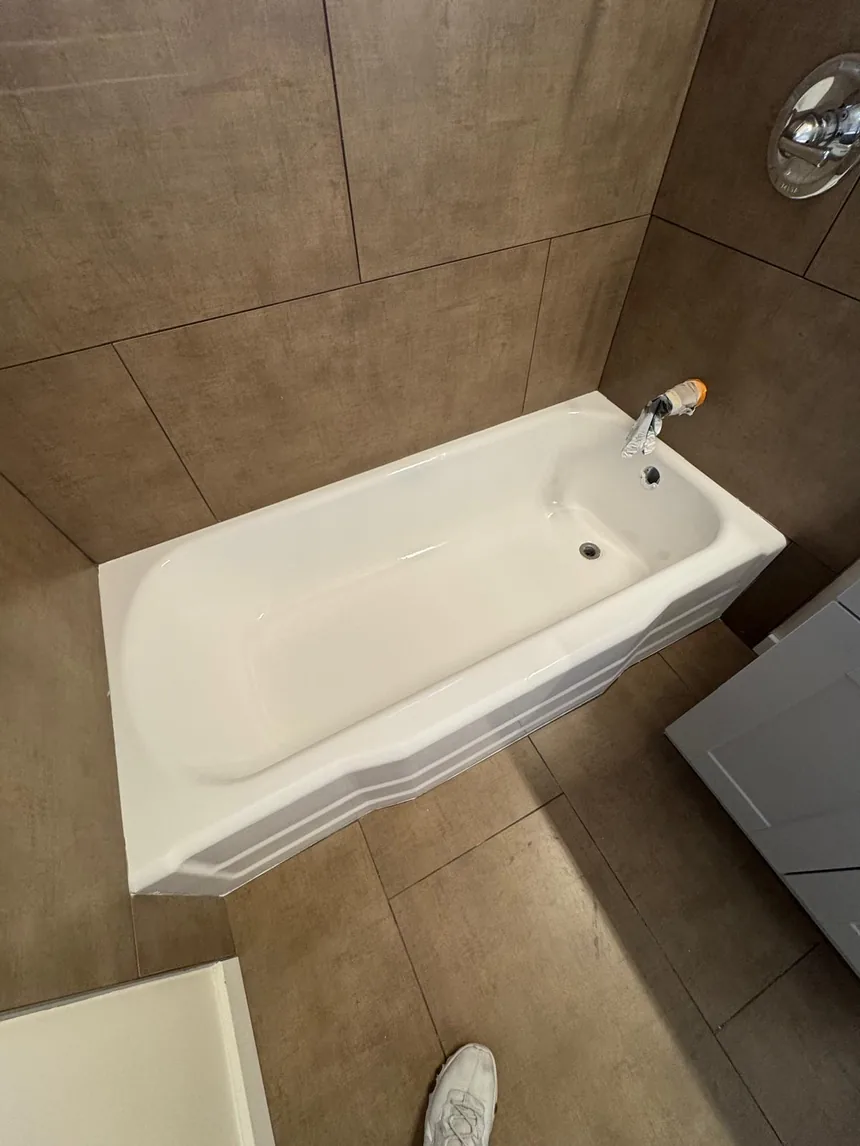 After
After
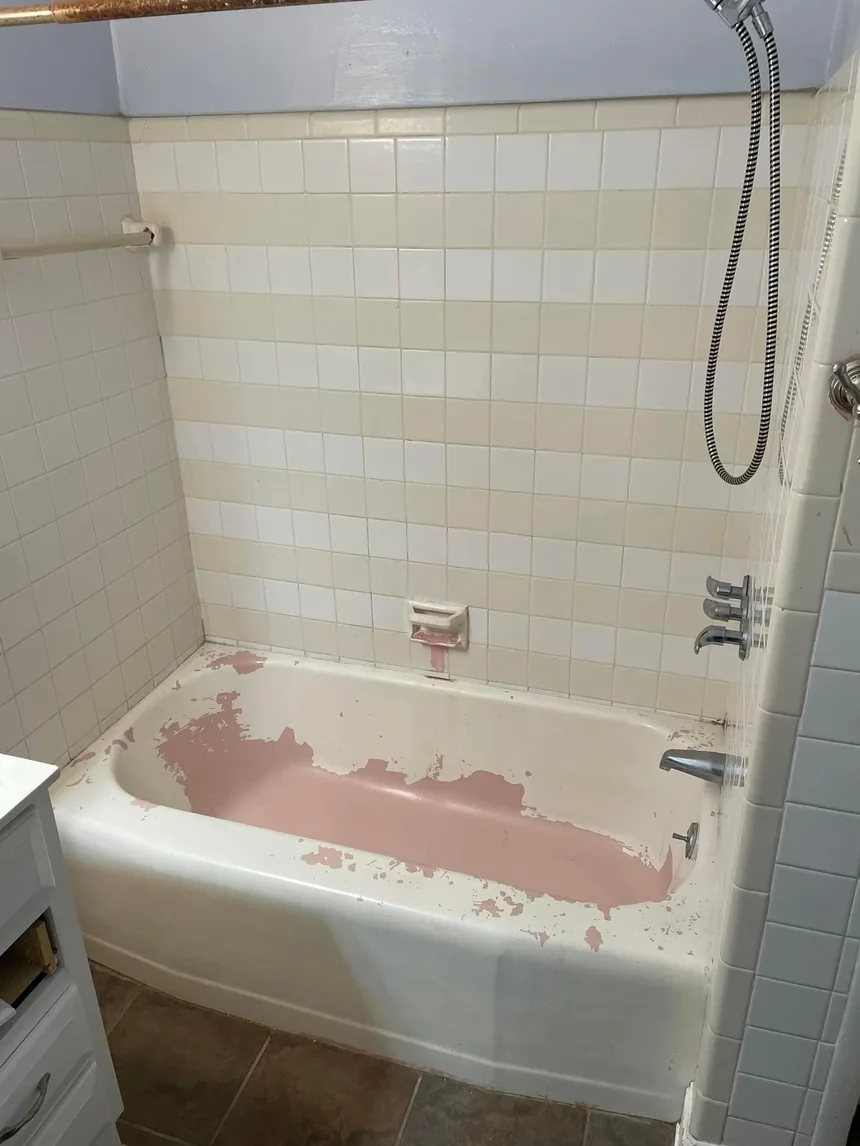 Before
 After
After
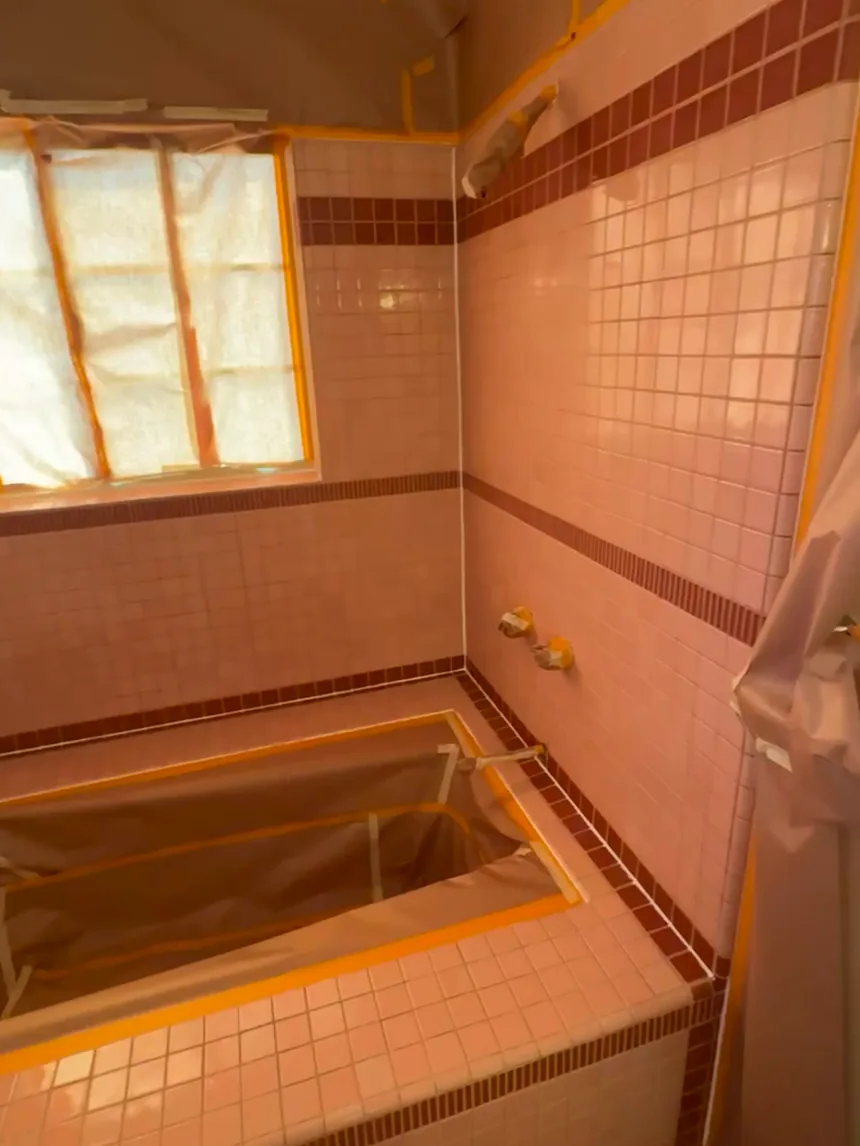
Your bathroom gets covered before anything gets sprayed
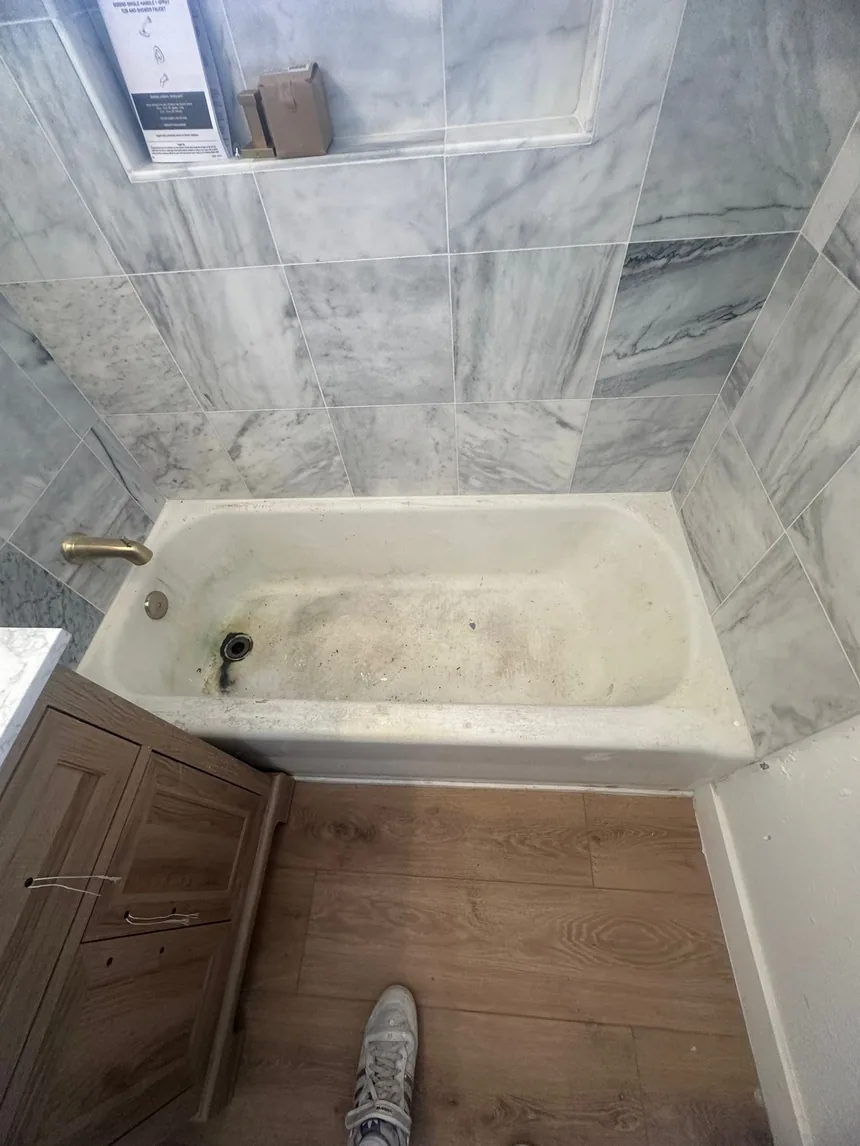
This is what a room looks like before the gun comes out. Window, walls, fixtures, floor — anything that isn't being refinished gets papered and taped off first.
It's the least interesting part of the job and it's the part that decides whether you're happy afterward. Overspray on a mirror or a chrome fixture is not something you can clean off later.
How a tub gets done
Four steps, start to finish.
-
We look at it
Material, damage, and whether anyone has coated it before. You get a written price. Free, and no pressure.
-
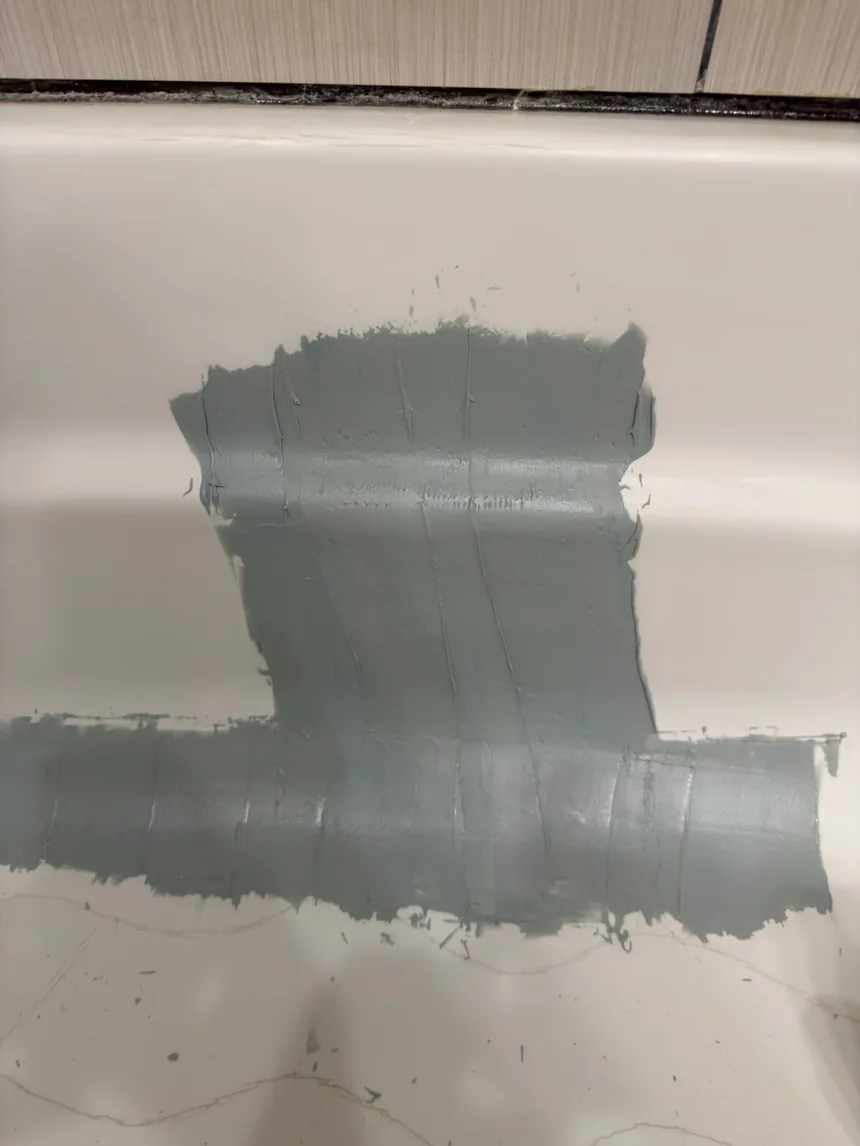
We prep and repair
Chips, cracks and rust are filled and sanded flat. The surface is cleaned and etched so the new finish bonds instead of sitting on top.
-
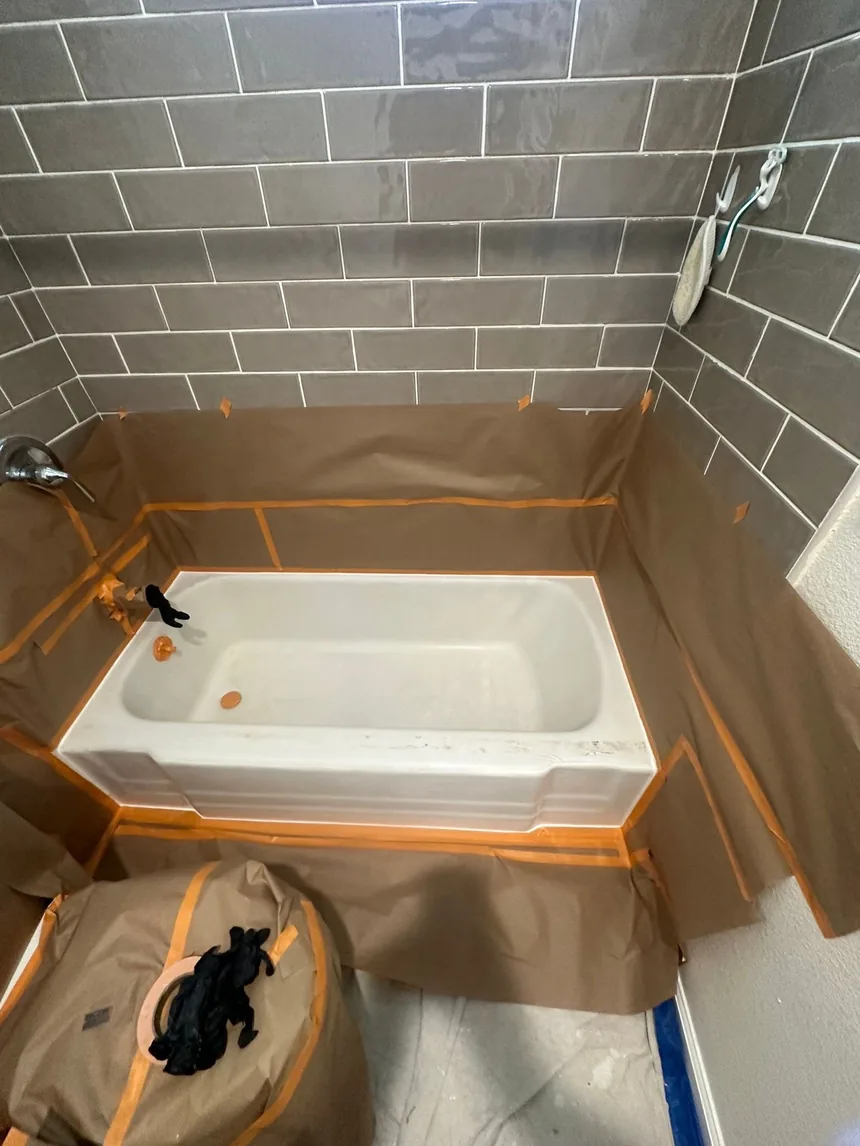
We refinish
Several coats go on with a spray gun, one over the other, until the surface is even edge to edge.
-
It cures
The finish hardens and your tub looks new again. We tell you exactly when you can use it before we start.
What people ask before they book
Can you change the color of my tub?
Yes. Most people go white, but bone and gray are common and we can match a color you already have in the room. The pink and almond tubs in our photos went white the same way.
My tub was refinished before and it's peeling. Can you fix it?
Usually. A coating that's peeling was almost always applied over a surface that wasn't prepped. The old finish has to come off first, which adds work — so tell us on the call, and we'll price it properly instead of finding out on the day.
Does it work on fiberglass?
It does. Fiberglass and acrylic go dull and chalky instead of chipping, and they need more sanding and less filling than a porcelain tub — but the result is the same hard, smooth surface.
How long does it take?
Most jobs are 3–5 hours and it's a single visit. The tub is yours again 24 hours after we finish — that second number is the one to plan around, not the first.
How long before I can use it?
24 hours. After that you can use it and touch it normally. Using a tub before the finish has cured is the one thing that ruins a good job, and it can't be undone, so if you're unsure on the day, ask us rather than guess.
Do I need to be home?
Someone needs to let us in and look at the finished work with us at the end. We'd rather you weren't in the house while we're spraying, but if you can't leave, staying in the living room or the kitchen is fine: the bathroom is sealed off and we run a blower fan in the window to pull the fumes straight outside.
What does it cost?
Bathtub refinishing starts at $500. What moves it is the material, the damage and whether there's an old coating to strip, so send us a photo or give us a call and you'll get a real number rather than a range. We've written up what decides the price of a refinishing job in full, with every starting price we have.
We also do
Get a free estimate
Tell us your name and number and we'll get back to you with a price. No obligation, no pressure.
Rather just call? (424) 308-4060