
Pricing · 9 min read
How much does bathtub refinishing cost in Los Angeles?
Most companies in this trade won't put a number on a page. Here are ours, for Los Angeles, Orange County and San Bernardino County.
- Bathtub — from $500
- Bathtub and the tile walls around it — from $900
- Shower stall — from $900
- Bathroom sink — from $250. Kitchen sink — from $300
- Bathroom counter — from $400. Kitchen counter — from $700
These are starting prices, not quotes. They describe the job with nothing wrong underneath it.
The reason nobody publishes figures like these is that a starting price invites the reply "but mine came out higher than that". So, to be straight about it: yours might. Rust that has to be cut back, an old coating that has to come off, broken tile that has to be rebuilt before anything is coated — all of that is hours, and the hours are the price.
Below are the six things a refinisher is actually weighing when they figure out your number, so you can place your own bathroom before anyone comes out to look at it.
1. What it's made of
Porcelain over steel, cast iron, fiberglass and acrylic all need different preparation. Cast iron enamel is thick and hard and needs proper etching. Fiberglass is softer and needs more sanding and less filling. The spraying is similar; the work before it isn't.
2. How much damage there is
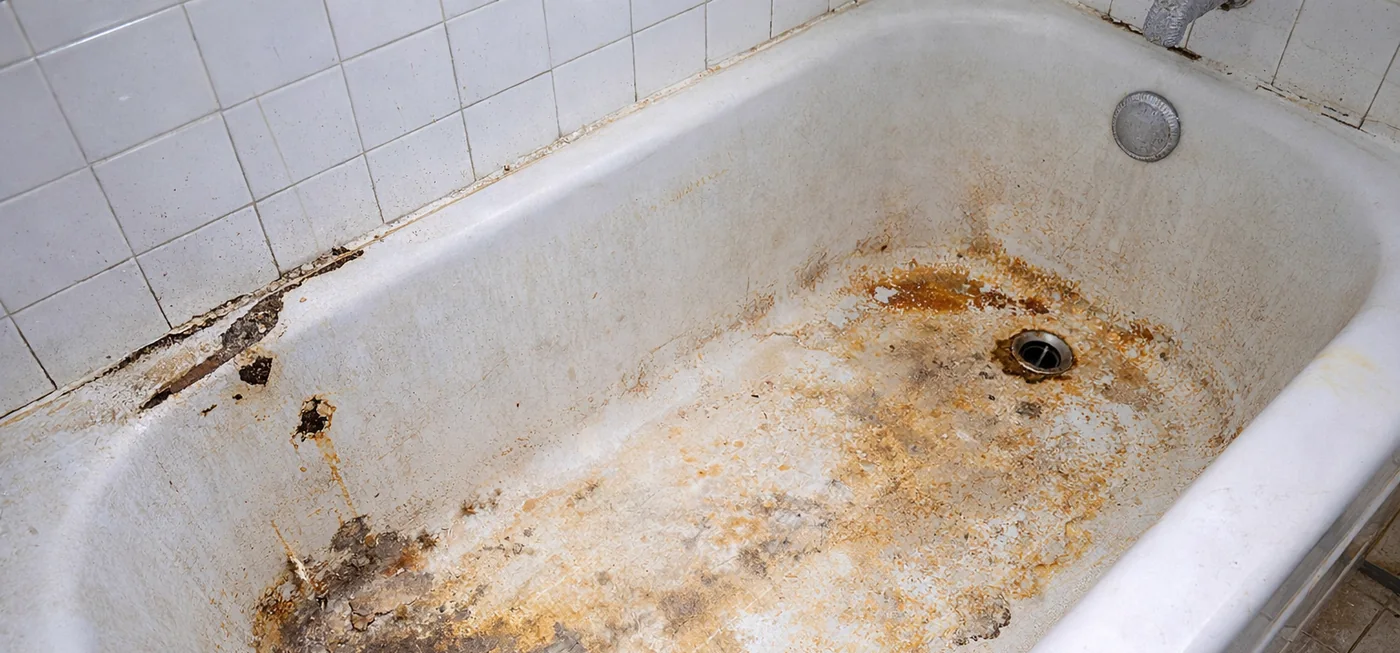
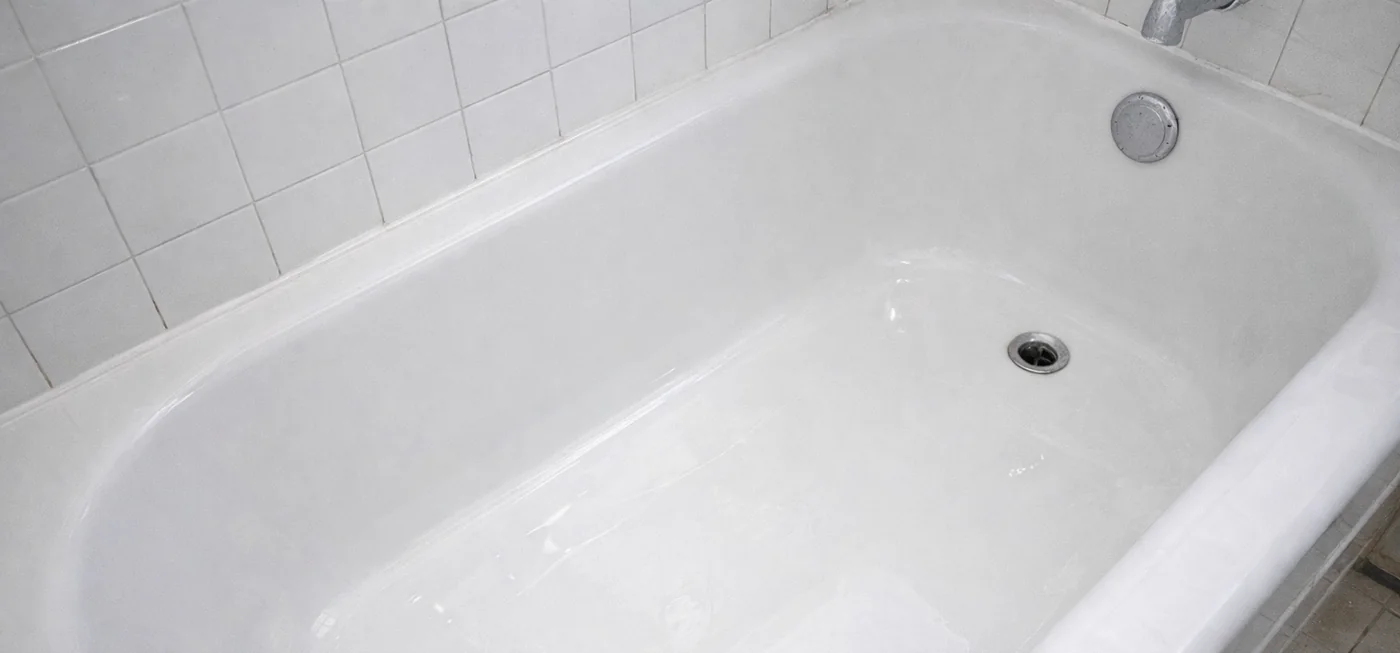
A dull but undamaged surface is the cheapest job there is — and it may not even need a full reglaze, which is what reconditioning is for.
 Before
 After
After
Chips, cracks and rust each have to be cut back, filled and sanded flat before anything goes over them. That's time, and time is the price.
3. Whether somebody has coated it before
This is the one that moves a quote the most, and the one people most often forget to mention. A previous coating — especially one that's peeling or bubbling — has to come off before a new finish can bond. Stripping is real work on top of the job itself.
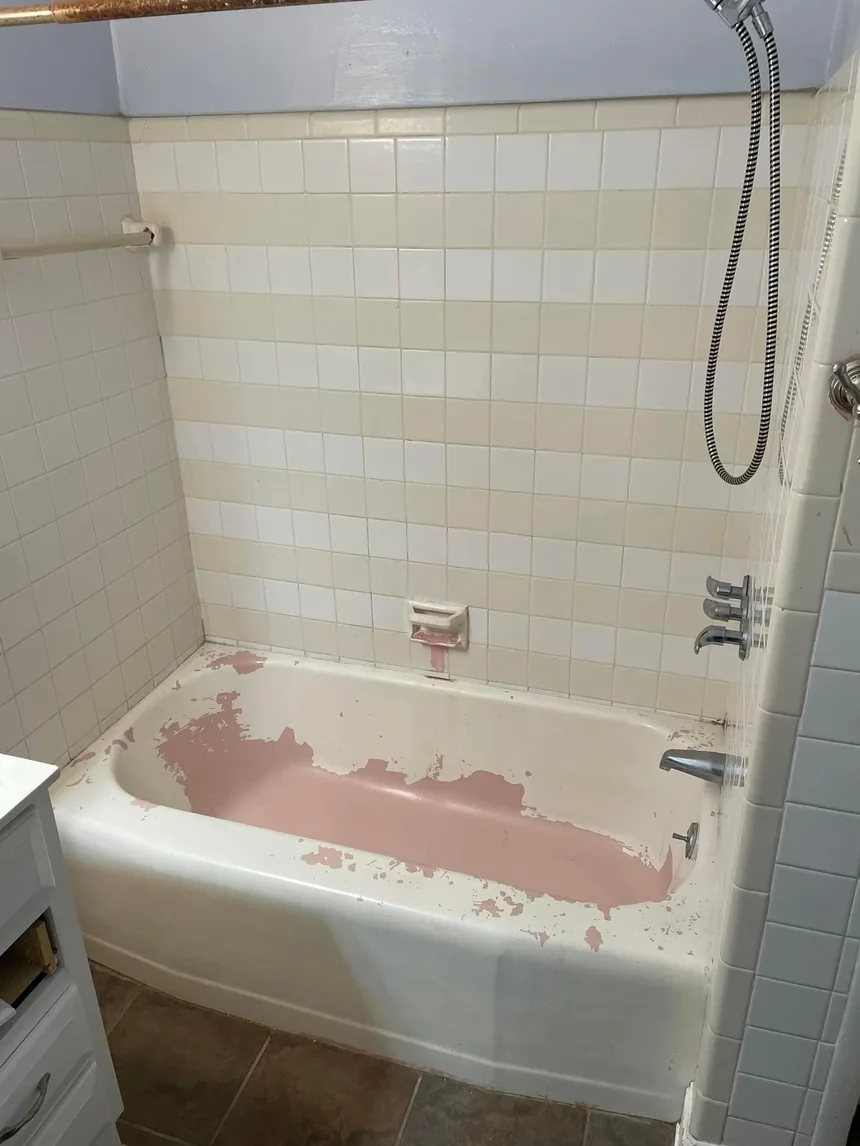
Tell us up front. It's much better for both of us than discovering it on the day, when the options are to rush it or to ask you for more money.
4. How much of the bathroom is included
The surface is a smaller share of the cost than people expect. Getting there, masking the room, protecting the floor and the fixtures, ventilating and packing down again is a fixed overhead that a single small item carries entirely by itself.
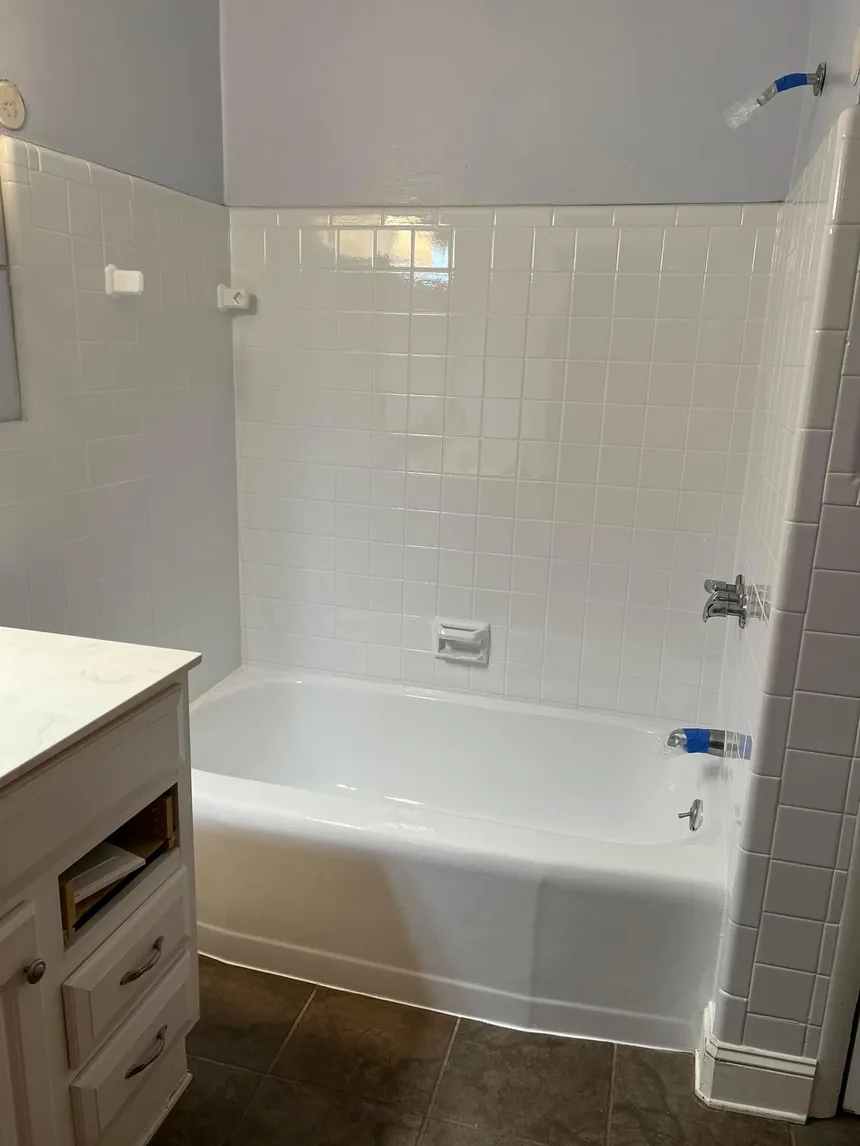
Which is why a sink on its own is poor value and a sink added to a tub is excellent value. Same room, same masking, same visit.
You can see it in our own list: a tub starts at $500, and a tub with its tile walls starts at $900. The walls roughly double the surface area being prepared and coated, and they don't double the price — because the masking, the travel and the setup were already paid for by the tub.
5. The room it's in
Two identical tubs in two different bathrooms are not the same job, and this is the factor nobody expects.
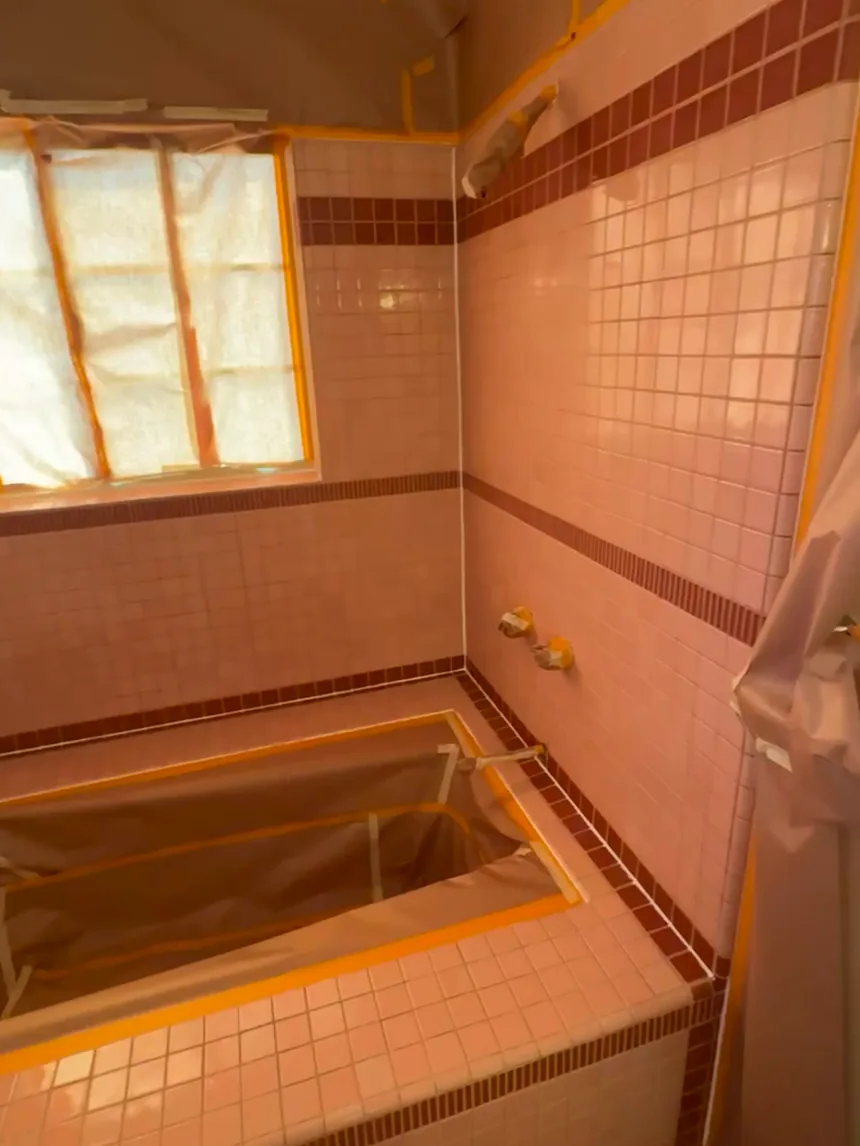
- Access. A first-floor bathroom off a hallway and a third-floor walk-up are different amounts of carrying, before anyone has touched the tub.
- Ventilation. A bathroom with a window is straightforward. A windowless interior bathroom needs air moved deliberately, and that is time and equipment.
- How tight the room is. A tub wedged between a vanity and a toilet with nine inches of clearance takes longer to mask and longer to work in than the same tub in an open room.
- What else is in there. Glass shower doors, a wall heater, an original tiled shelf — everything that can't be removed has to be masked around, carefully.
6. The color
White and the standard off-whites are the straightforward end. Matching an existing color — a sink you're keeping, a counter that's staying, a tile you like — is a different piece of work, because a match that is nearly right looks worse than a deliberate contrast.
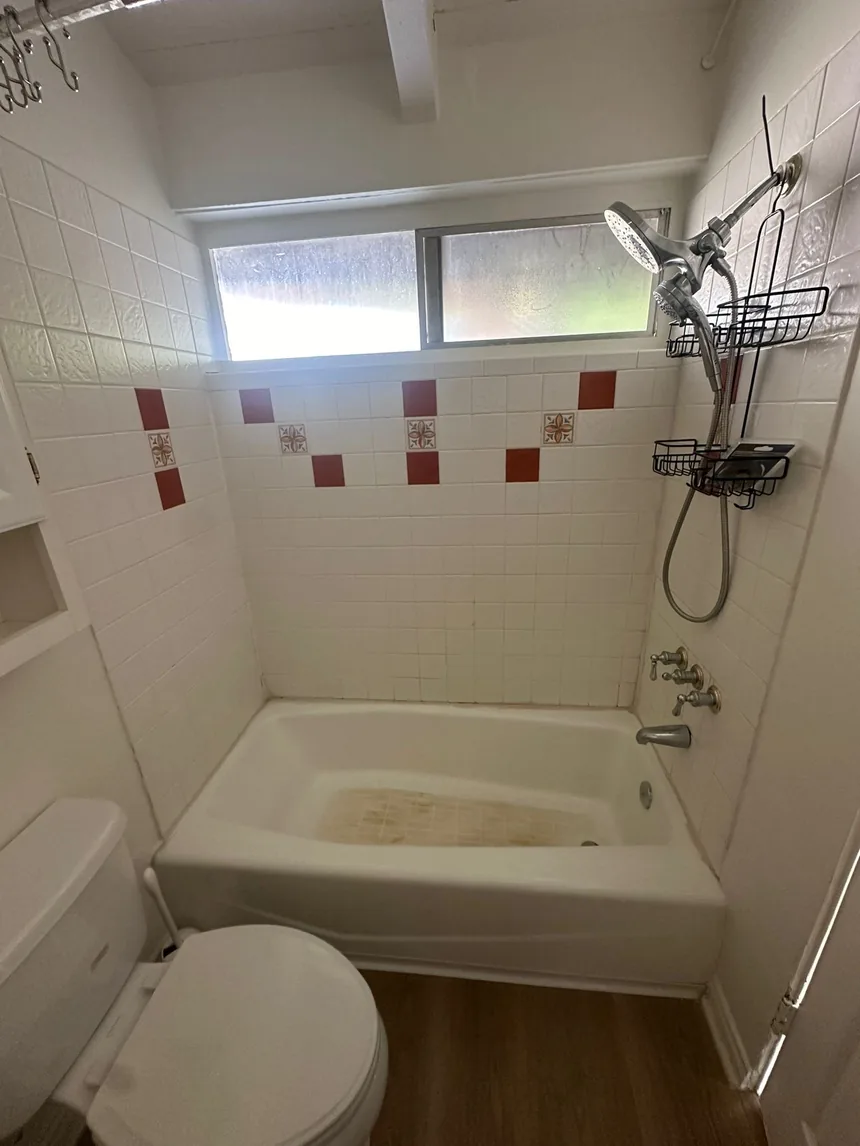 Before
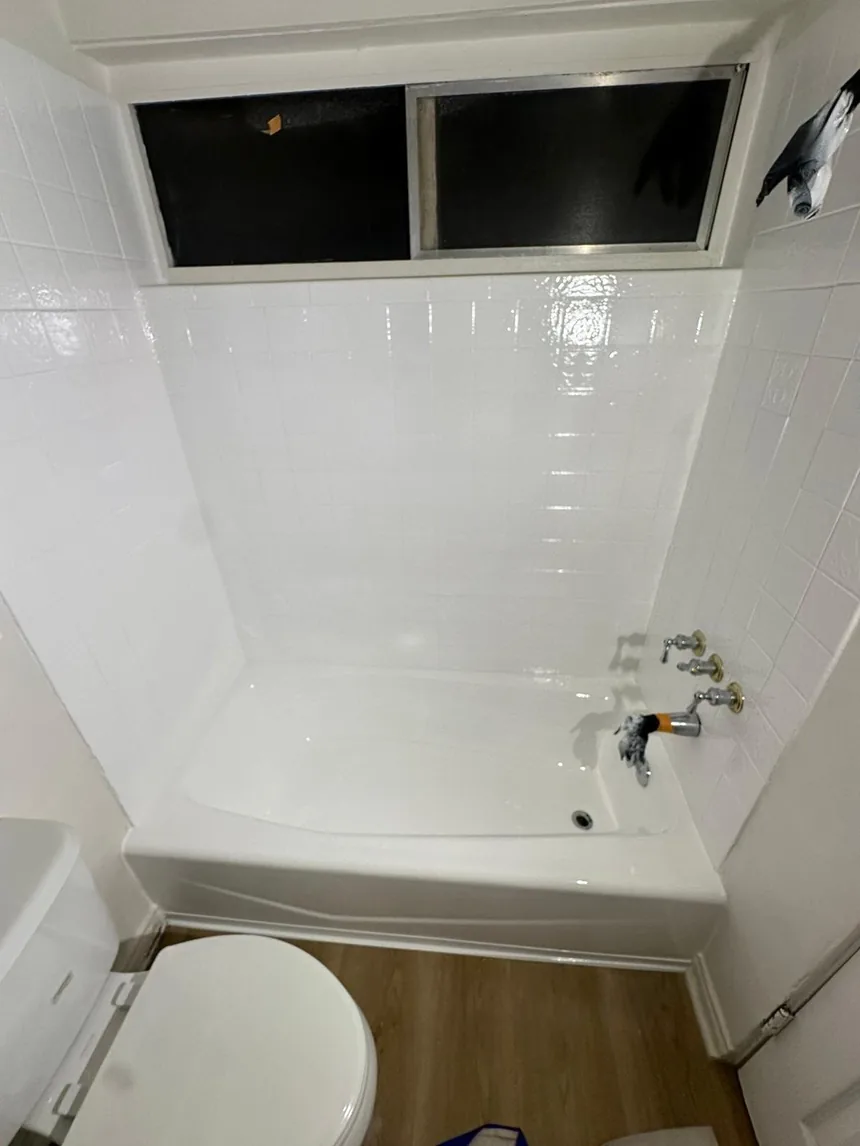 After
After
It is worth asking about early rather than at the end. Color is decided before anything else happens, and it's one of the few parts of the job that can't be revisited afterward.
The prices you find online
You will find national averages for bathtub refinishing without much looking. They are not much use here, for two reasons.
The first is that Los Angeles is not the national average at anything. The second, and more important, is that those figures describe a plain tub in good condition with nothing else included — which is the cheapest version of the job and rarely the one in front of you. A quote that comes in far under what everyone else says is usually quoting that plain version of your bathroom, and the difference turns up later.
It's also why our figures are at the top of this page instead of behind a form. A starting price you can hold up against three other companies is more use to you than a range wide enough to cover every bathroom in Southern California, and we'd rather you came to the estimate already knowing whether we're in your ballpark.
The comparison that actually matters
Whatever the number comes out at, the useful thing is not to compare it to zero. It's to compare it to the alternative, which is demolition, a plumber, new tile, haul-away and a bathroom out of use while trades arrive in sequence.
Why the cheapest quote is often the most expensive
Preparation is most of the labor and none of the visible result. It is therefore the only place where a quote can be cut without the customer noticing on the day.
A tub that was sprayed over an old coating, or over a surface that was never properly etched, looks identical to a good job for about six weeks. Then it lifts. And at that point you don't pay for a second refinish — you pay for stripping a failed coating first, which is more work than the original job, followed by the refinish you thought you had already bought.
That's the real arithmetic behind a low number, and it's why the questions worth asking are almost all about what happens before anyone sprays anything.
Why we won't guess on the phone
We'll tell you where a job starts — that's the list at the top of this page. What we won't do is tell you where yours lands without having looked at it.
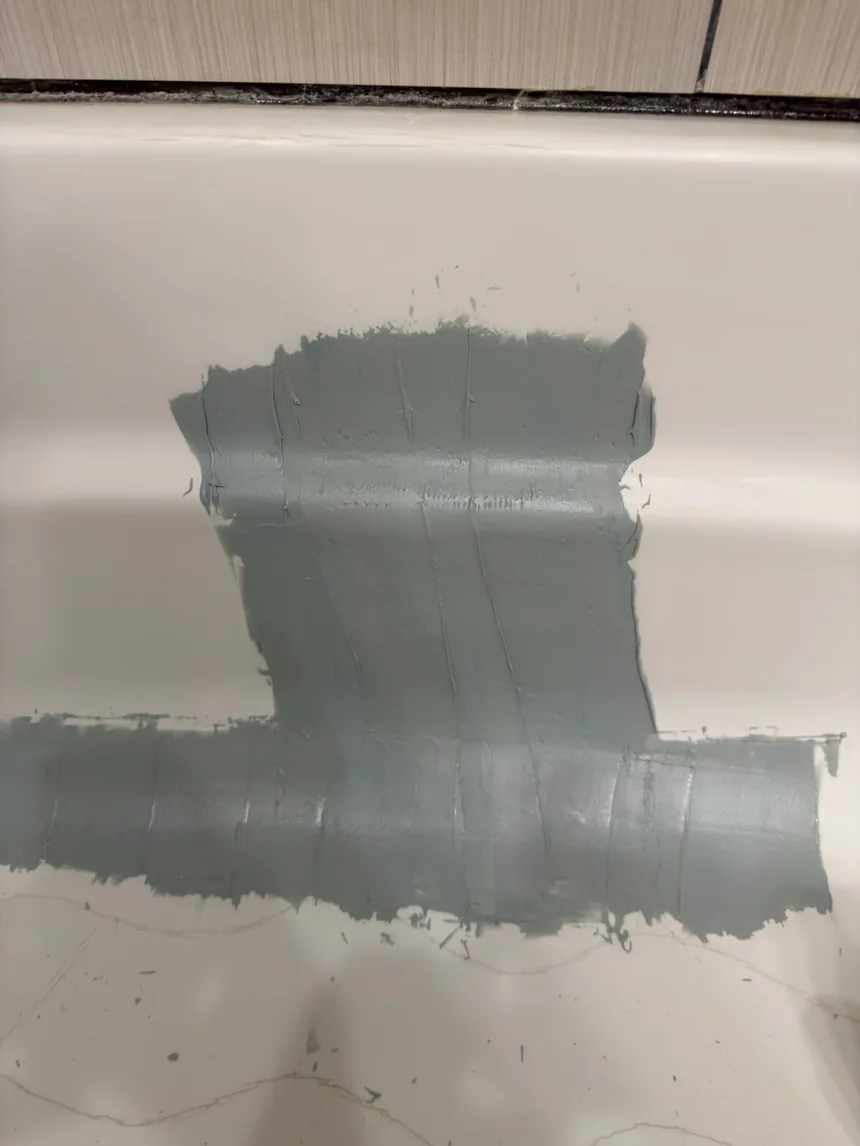
A range wide enough to be safe isn't useful to you, and a number narrow enough to be useful isn't safe until someone has looked. So the estimate is free, it's written, and there's no obligation attached to it.
A photo is usually enough to get started — you don't need to book a visit to find out roughly where you stand.
What a written estimate should tell you
Whoever you end up using, the estimate should answer all of this on paper. If it doesn't, the gaps are where the disagreements live:
- What's included — tub only, tub and surround, sink, counter.
- What preparation is covered, and whether stripping an old coating is extra.
- The color, written down rather than agreed verbally.
- How long you can't use it, in hours. Ours is 24 hours.
- What happens if something turns up underneath once work starts — because occasionally it does.
That last line is the one that matters most and appears least often. Ask for it.