
Complete guide · 10 min read
Bathtub reglazing in Los Angeles: a homeowner's guide
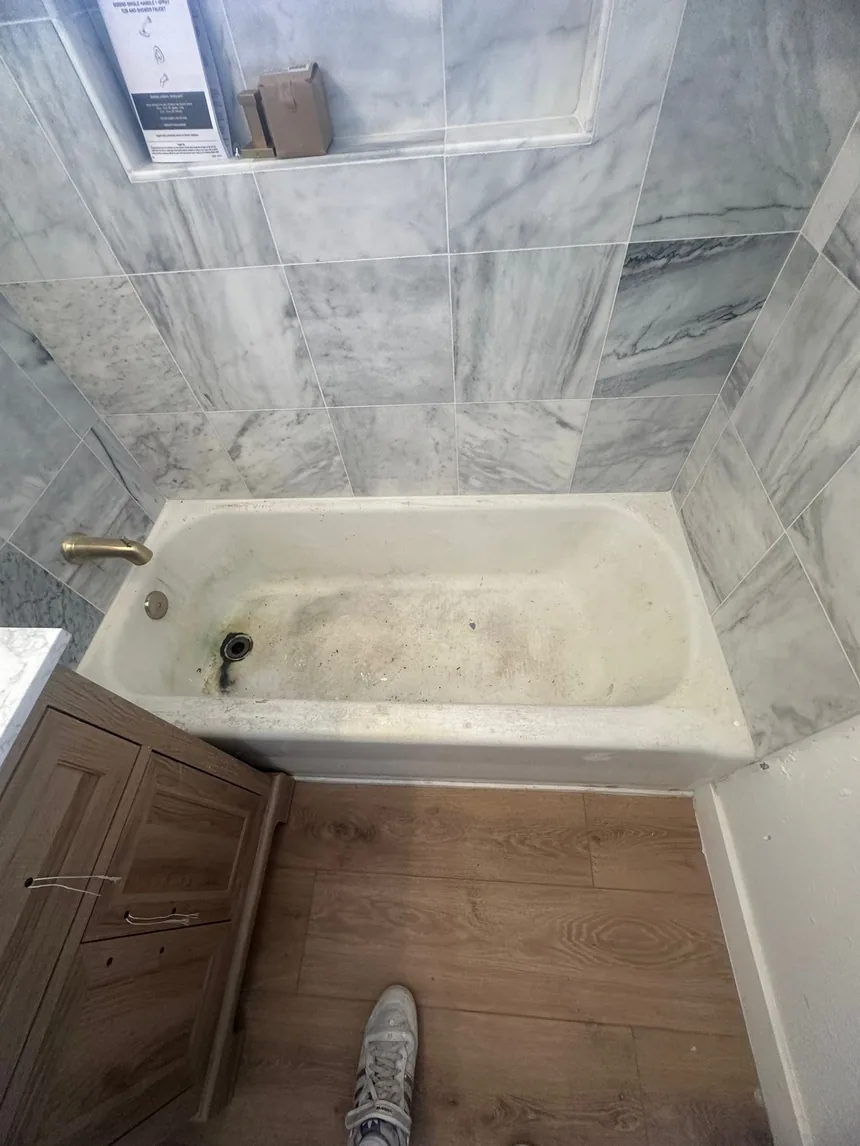 Before
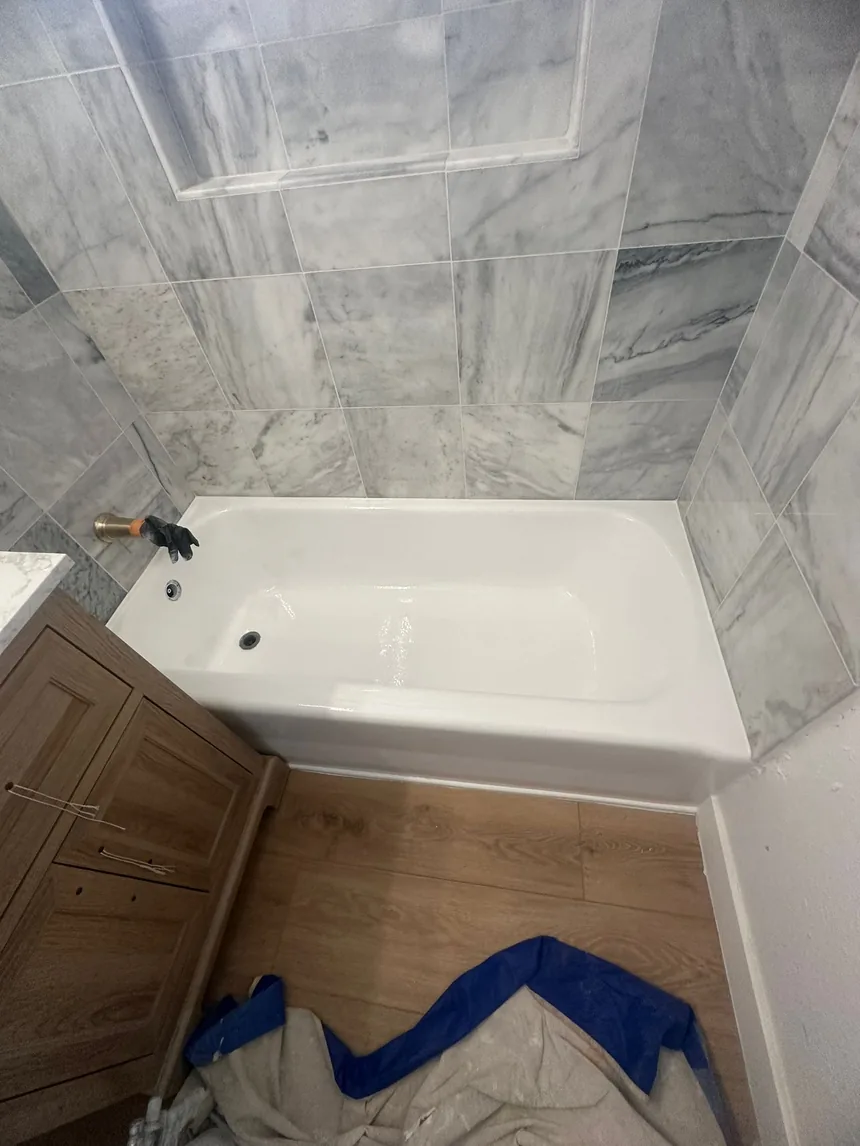 After
After
If you've got a worn bathtub somewhere in Los Angeles or Orange County and you're trying to work out what to do about it, this is the whole picture in one place. Everything here links out to a fuller answer if you want to go deeper on one part.
Reglazing, refinishing, resurfacing — is there a difference?
No. They're the same job under different names, and every company in the trade picks one. You'll also see "re-enamelling", which is misleading: real vitreous enamel is fired on in a factory at high temperature, and nobody is doing that in your bathroom.
What actually happens is that the existing surface is repaired, prepared, and given a new coating bonded to it. The tub itself never moves.
Why so many LA bathrooms need it
Southern California has an unusually old housing stock in the middle and an unusually uniform one on the edges, and both produce tubs that need this.
- Pre-war neighborhoods — Long Beach, Mid-Wilshire, Pasadena, Santa Monica — are full of cast iron tubs and original tile that are sixty to a hundred years old.
- Post-war tracts — Lakewood, Torrance, Downey, Anaheim — have porcelain-over-steel tubs and four-inch tile, often in period colors.
- Newer developments — Irvine, Huntington Beach — have molded fiberglass units that have gone dull and chalky.
- Hard water across the Inland Empire drives mineral staining into surfaces that have already worn thin.
We've written up what we typically find in each area on the locations pages.
Which tub do you have?
Tap the side of it.
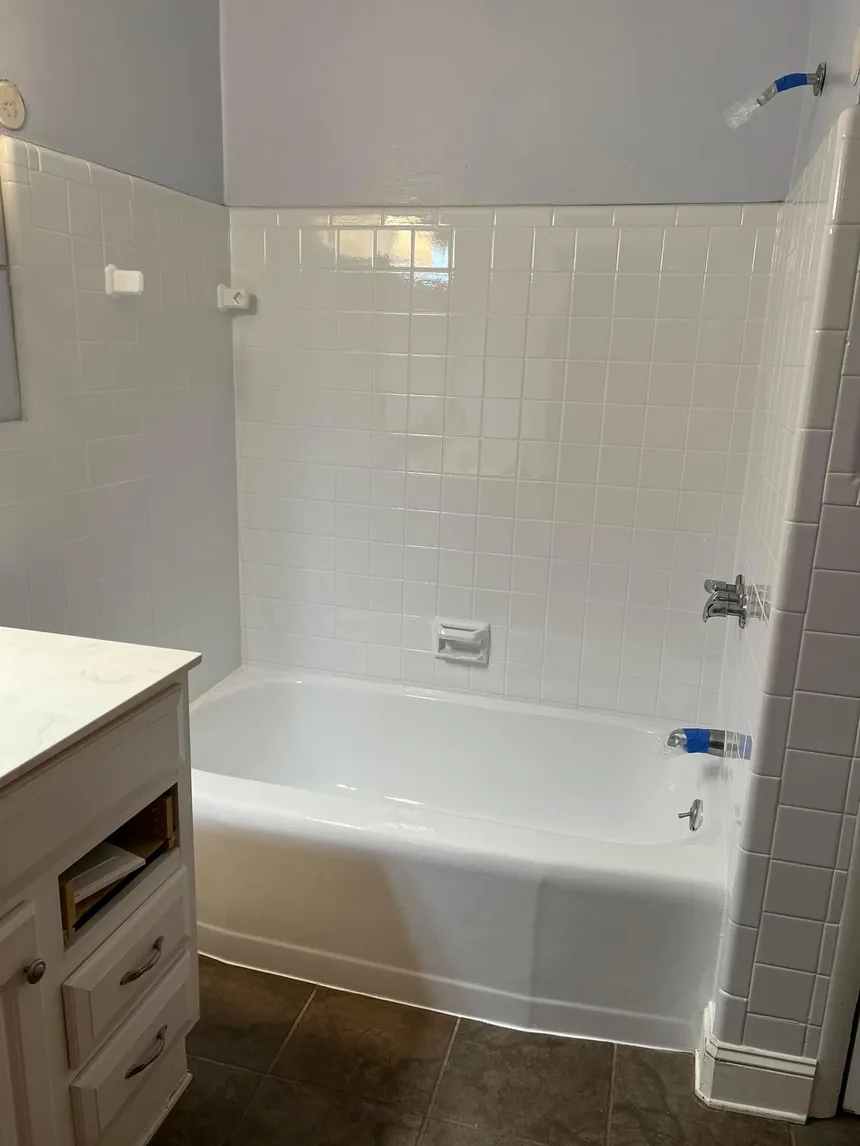
- A dull thud, barely any sound — cast iron. Heavy, old, almost always worth saving. See refinishing cast iron.
- A ring — porcelain over steel. The most common tub in LA. Chips, and then rusts from the chip outward.
- Hollow and slightly plasticky, and the floor gives underfoot — fiberglass or acrylic. See refinishing fiberglass.
It matters because preparation differs completely between them, and it changes the quote.
Refinish, replace, or line it?
Three options get put in front of you. Quickly:
Replacing is right when the tub isn't sound — leaking, flexing underfoot, rusted through — or when you're gutting the bathroom anyway. Understand what it involves: demolition, the surround usually coming off with the tub, plumbing disconnected and re-run, haul-away, new tile, and several trades in sequence. Full comparison here.
A liner — an acrylic shell fitted inside your tub — is worth understanding before you buy one, because it leaves a cavity between two surfaces and it's very difficult to undo. More on liners.
Refinishing is right when the tub is sound and the surface has worn through, which describes the large majority of tubs.
What it costs, and what moves the price
Nobody can give you a real number without knowing a few things, and a range wide enough to be safe isn't useful to you. What drives it:
- Material — cast iron, steel and fiberglass each prepare differently.
- Damage — every chip and rust spot is cut back and filled individually.
- A previous coating — the biggest single variable, because it has to be stripped first.
- How much of the bathroom — tub only, or tub plus tile, sink and counter.
That last one is worth dwelling on, because it's where people lose money. Most of the cost of a small job is the overhead: traveling, masking the room, protecting fixtures, ventilating, packing down. A sink on its own carries all of that alone. Added to a tub job in the same bathroom, it carries almost none. More on pricing.
How long it takes, and when you can use it
Two different questions. The visit is 3–5 hours for most jobs and it's a single one: mostly preparation — masking, stripping if needed, repairs, cleaning and etching — with spraying as the short part at the end.
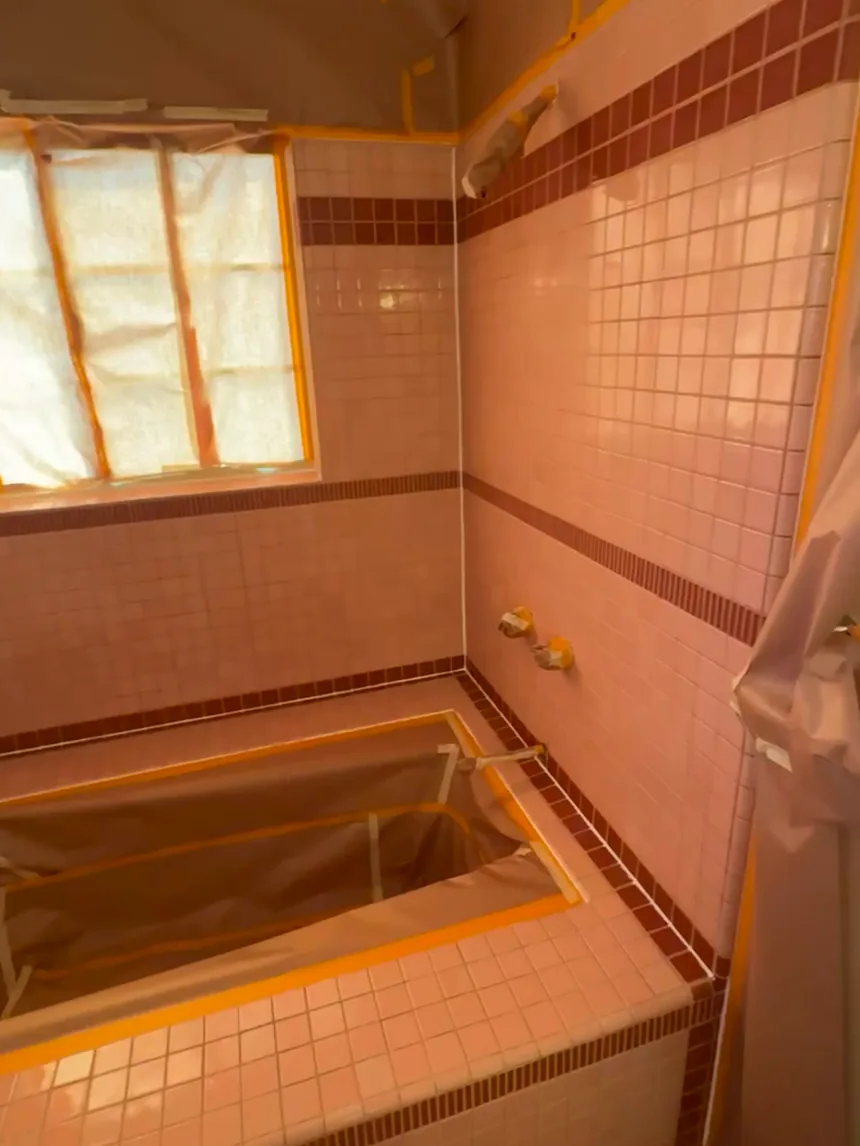
Then it has to cure, which is not the same as drying. That's a further 24 hours, and it's the number to plan around: using the tub early is the most common way a good job gets ruined. Full timeline.
How long it lasts
The industry figure is ten to fifteen years, but the spread around it is huge and it's decided almost entirely by preparation and aftercare rather than by the coating. The detail is here.
The single biggest risk: hiring the wrong person
Refinishing has a low barrier to entry, and the difference between excellent work and work that fails in six weeks is invisible on the day. Bond failure — peeling, bubbling, lifting — is almost always a preparation failure, not a coating failure.
The two questions that sort people out fastest: "what exactly do you do to the surface before you spray?" and "is there any reason you wouldn't do this job?" Someone who can immediately describe the jobs they turn down is someone who's assessing your tub rather than measuring it. All nine questions.
Don't forget the rest of the room
Tile and grout can be done at the same time — the room is masked off either way — and it's how a pink or green mid-century bathroom stops being a pink or green bathroom without a tile ever coming off the wall. Tile countertops and sinks likewise.
If you own rentals
Refinishing exists for turnovers: no permit, no dumpster, no plumber, no other trades waiting on each other. The property manager page covers how that works across multiple units.
Start here
Send a photo of the tub. It's usually enough to tell you what it's made of, what shape the surface is genuinely in, whether it's been coated before, and whether you need a full reglaze or the lighter reconditioning.
And if the answer is that refinishing is the wrong call for your tub, you'll be told that — for free, before you've spent anything.