
Showers · 8 min read
Regrouting or refinishing a shower: which one do you need?
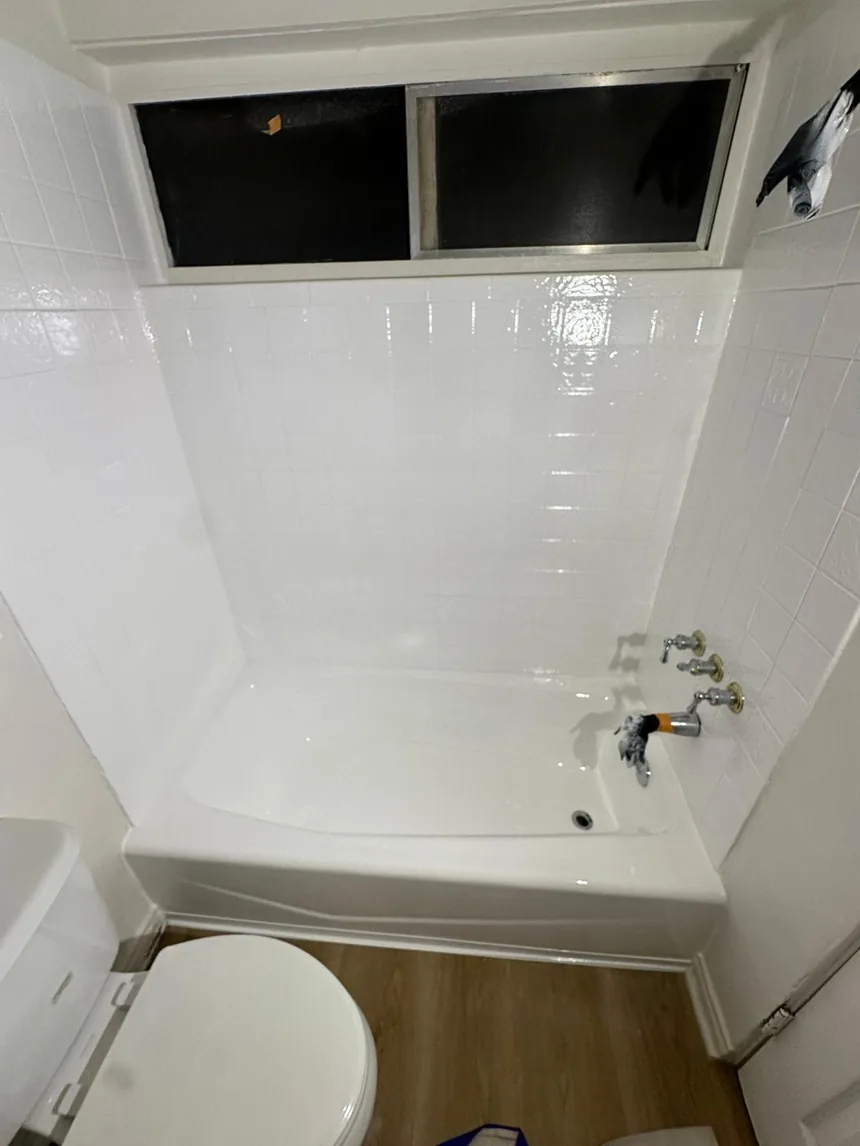
Two people can describe the same shower in the same words — "it never looks clean" — and need completely different work doing. Sorting out which one you are is worth doing before anyone quotes you, because the two jobs are not close in scope, price or outcome.
What grout actually is, and why it loses
Grout is cement. It is porous by nature, it is the lowest point on the wall where water runs down, and it is softer than everything around it. Over years it absorbs soap, minerals and body oil, and in a room that does not dry out quickly it grows mold in the pores rather than on the surface.
That last distinction is the one that matters. Mold on grout wipes off. Mold in grout does not, because the stain is below the surface and the surface is what your cleaner touches. People spend years on that wall with a brush, getting a result that lasts until the next shower.
When regrouting is the right answer
Regrouting means raking out the old grout and replacing it. It is a maintenance job and it is the correct one when:
- The tile itself is in good condition and you like it.
- The grout is cracked, crumbling or missing in places — that is a water problem and it needs fixing regardless of appearance.
- The discoloration is confined to the grout lines, with the tile faces still clean and glossy.
- You are happy for the wall to look the same afterward, only with clean lines.
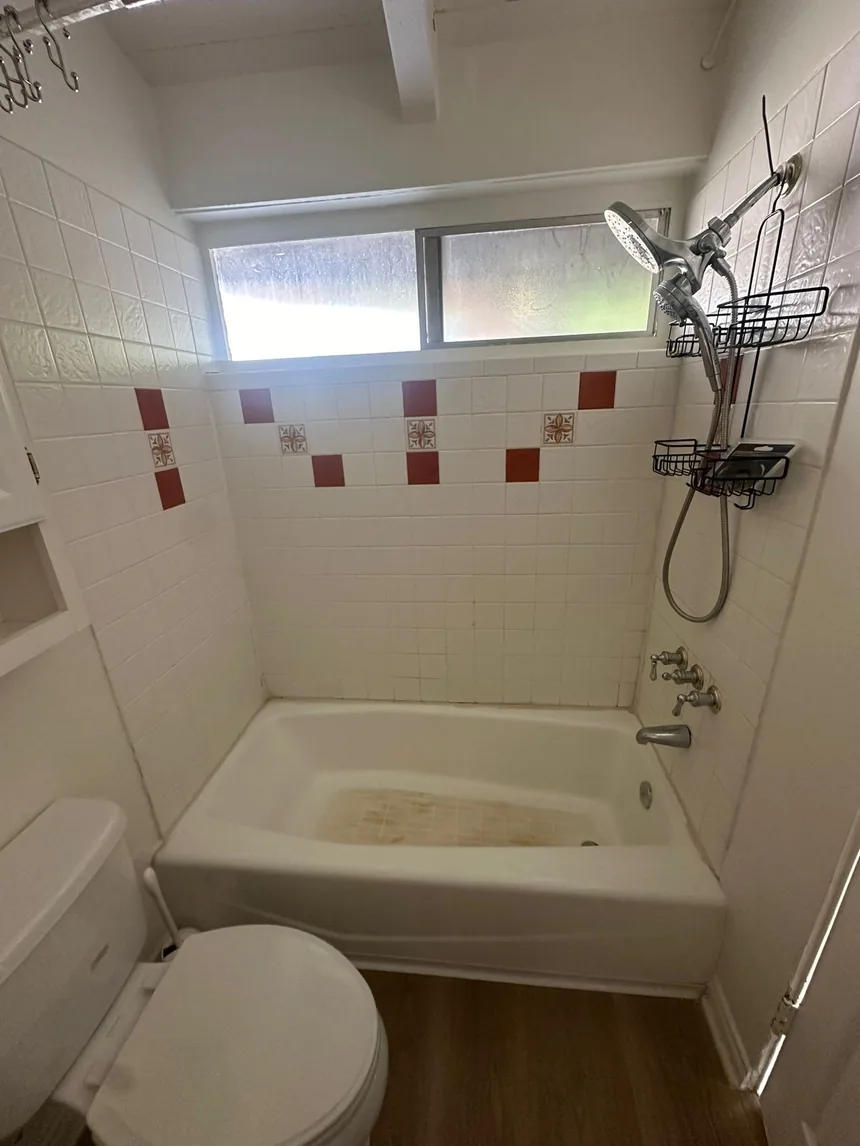
That last point is the catch. Regrouting gives you your existing shower back, in good order. If what is bothering you is the color of the tile, or the decorative band someone chose in 1962, or a wall that reads as dated even when it is spotless, new grout will not touch it.
When refinishing is the right answer
Refinishing coats the tile and the grout together, as one surface. That single sentence is the whole argument:
- The grout lines stop being porous. They are under the same non-porous coating as the tile, so there is nowhere for staining to sit. The thing that made the wall look dirty is gone, not cleaned.
- The color changes. Pink tile, green tile, a brown travertine-effect wall, a border of patterned tile across the middle — all of it goes to one even color. For a lot of bathrooms that is the actual request.
- It wipes instead of scrubbing. Which, as a side effect, is what stops the next fifteen years of wear.
It is the same reasoning as a tile countertop, where the grout is not a cosmetic issue but the reason the surface is unhygienic in the first place.
What has to happen first either way
Neither job starts with the thing people think it starts with.
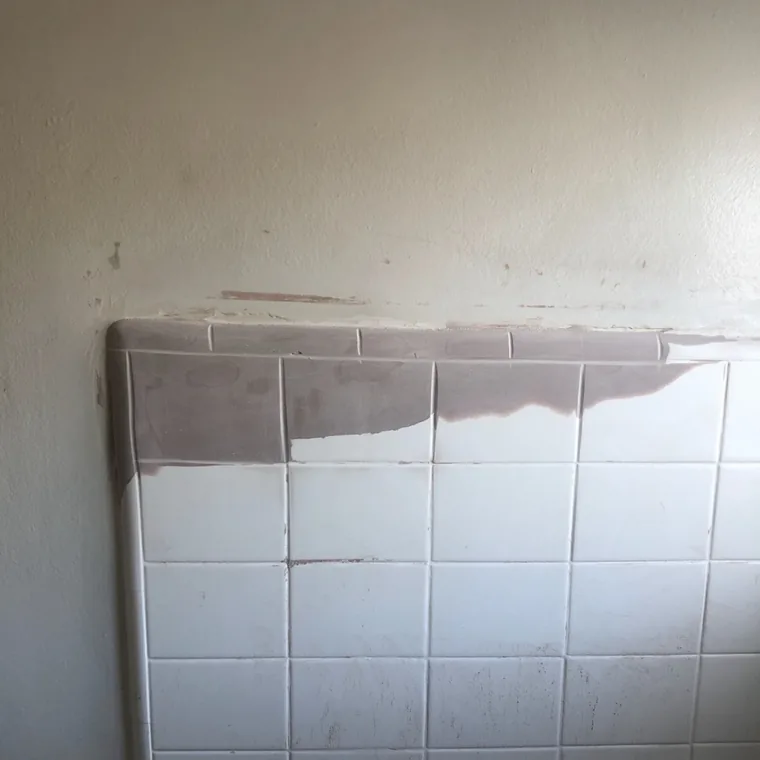
Loose tile has to be re-set first, or the finish cracks. Tap along the wall with a knuckle: a hollow note means the tile is no longer bonded to what is behind it. That tile will move, and anything laid over a moving surface fails along the same line. Missing tile has to be filled and leveled, and that repair is done before any coating is considered.
We do that as part of the job. What we do not do is remodeling or plumbing — if the wall behind the tile is wet, soft, or the problem is a leaking valve, that is a different trade and we will tell you so rather than coat over it. A surface over a wet wall is a surface with a date on it.
The caulk line is not grout, and it fails first
This one is worth separating out, because it is responsible for a lot of unnecessary regrouting quotes.
The joint where the tub meets the tile is not grout. It is caulk — flexible on purpose, because the tub moves relative to the wall every time it fills with water and a rigid material there would crack within a year. Caulk has a shorter life than grout, it is the lowest and wettest line in the room, and it is almost always the first thing to go black.
People look at a black line along the bottom of the wall and conclude the whole shower needs regrouting. Often it needs a bead of caulk replaced, which is an afternoon. Old sealant goes black from the inside and no cleaner reaches it, so it has to come out and go back new — and on a tub that is otherwise sound, that plus a deep clean is sometimes the entire job. We call that reconditioning, nothing is coated, and it is the cheaper answer when it is the right one.
The honest comparison
- Keep the tile, fix the lines: regrout. Cheaper, less disruptive, and your shower looks like itself in good condition.
- Keep the tile, change how the whole thing looks: refinish. One color, grout included, three to five hours, one visit.
- Tear the tile out: a remodel, and a different budget entirely. It is the only option that changes the shape of the room, and the only one that needs other trades.
A decent number of the walls we are called about are structurally perfectly sound and simply old-looking, which is the case refinishing exists for. Equally, if what you have is three cracked grout lines in a tile wall you are happy with, we will tell you to get it regrouted.
What you can ask us
Send a photo of the wall, straight on, in daylight, and a close one of a grout line. Nine times out of ten that is enough for us to tell you which of these two you need without anybody driving anywhere. We cover Los Angeles, Orange and San Bernardino counties, the estimate is free, and residential work carries a five-year written warranty.