
Showers · 8 min read
Shower pan refinishing: the part of the shower nobody looks at
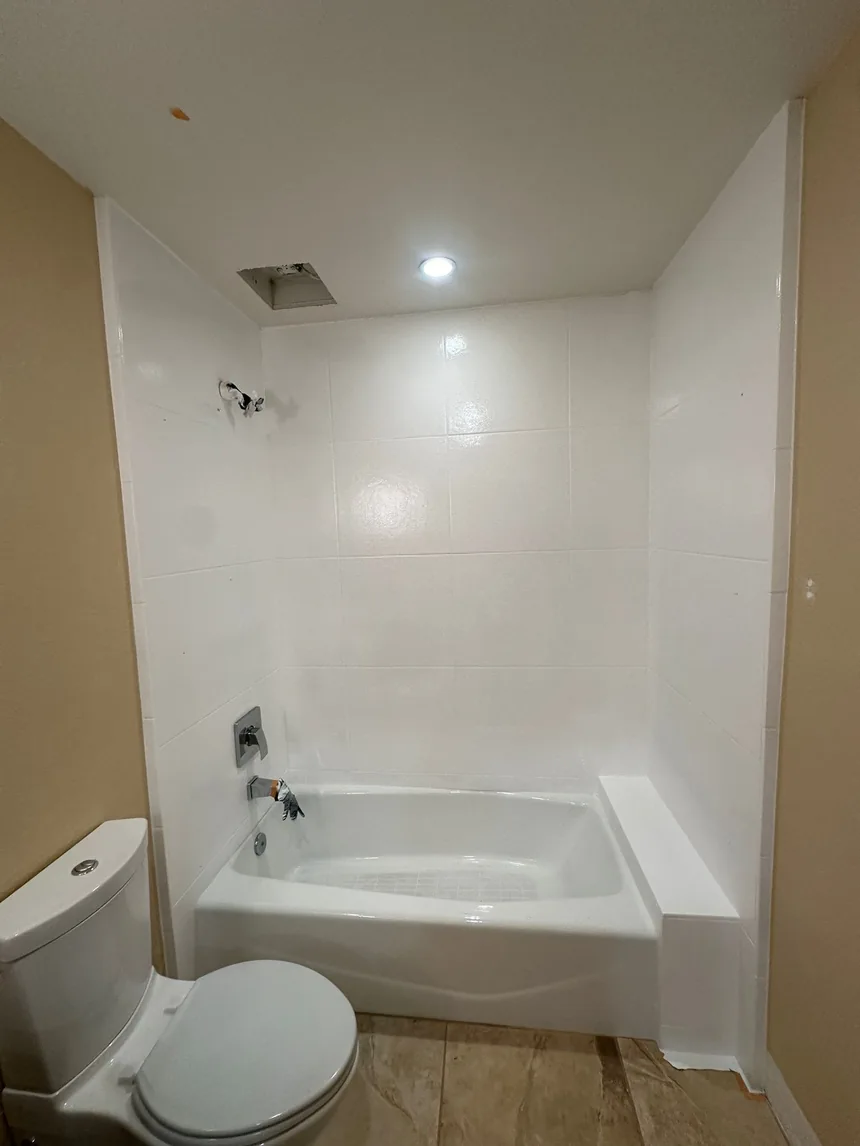
The shower pan is the floor of the shower — the tray you stand in. It is the single hardest-worked surface in a bathroom and almost nobody inspects it until it has gone obviously wrong, because you are standing on it rather than looking at it.
It is also, in most cases, the first part of the shower to fail. Not the walls. The floor.
Why the floor goes first
Everything that happens in a shower ends up on the pan. Every drop of water, every bit of soap, every mineral the water leaves behind, and all of the weight. Then add the texture: almost every pan has a molded non-slip pattern on it, and that pattern is thousands of tiny ridges and valleys for dirt to sit in.
That texture is the reason a shower floor stops responding to cleaning long before the walls do. You cannot wipe a textured surface clean. You can only scrub it, and scrubbing is what wears the finish off the high points, which makes the surface rougher, which makes it hold more dirt. The result is a floor that is permanently gray in the middle and looks dirty ten minutes after you have cleaned it. That is not a hygiene problem — it is a surface problem, and no cleaner solves it.
The three things that actually go wrong
- The surface is worn through. On a fiberglass or acrylic pan the colored gelcoat layer is thin. Once it is gone in the traffic area you are looking at the material underneath, which is duller and porous and will never match again.
- Hairline cracks, usually near the drain or the front edge. These come from flex. A pan that was not fully supported underneath when it was installed moves a fraction of a millimeter every time somebody steps in, and over fifteen years that becomes a crack. They are repairable, and they are also a reason to act rather than wait.
- Staining that will not lift. Iron in the water, a leaking valve above, a rubber mat left in place. Once it is in a porous surface it is in.
One thing that is not on that list, and matters: if the floor feels soft or springy underfoot, or if there is any sign of water in the ceiling below, the problem is not the surface. That is a failed pan or a failed seal, and it needs opening up. We do not do that work and we will say so rather than coat over it.
What refinishing a pan involves
Mechanically it is the same process as a tub, with one important difference at the end.
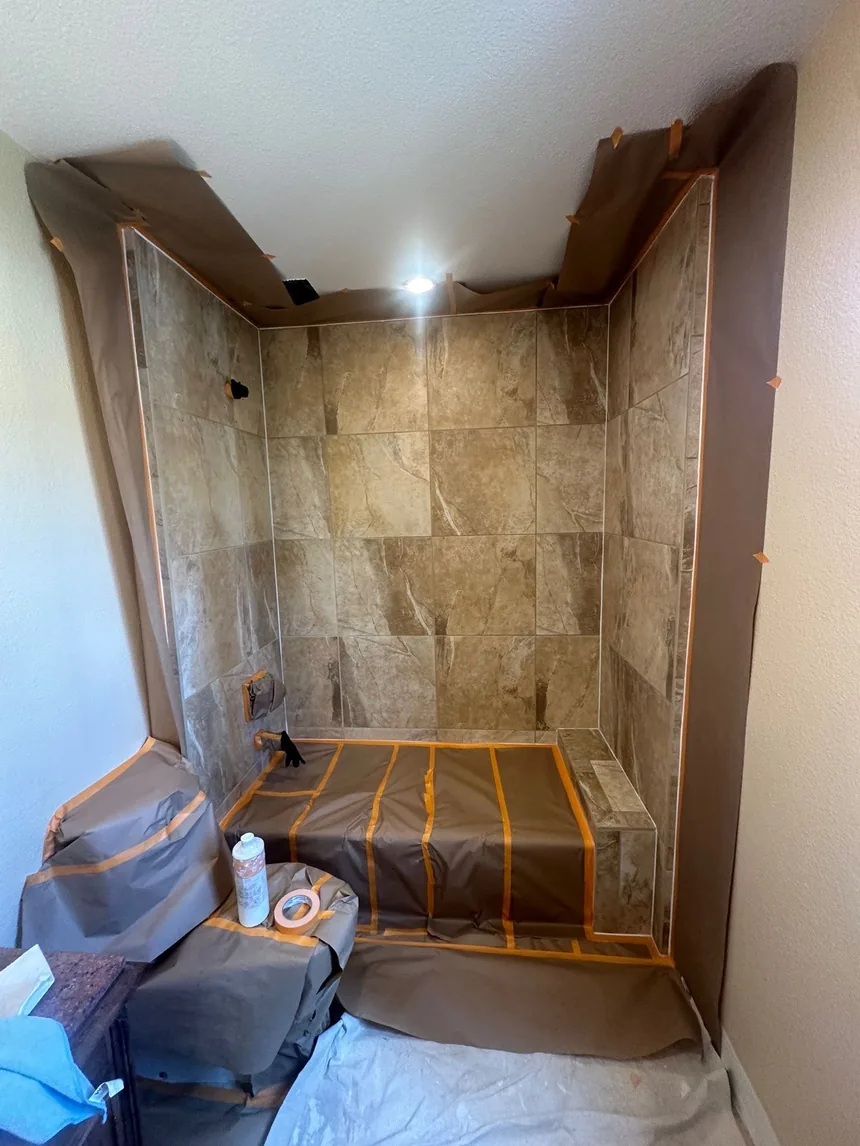
The surface is cleaned to get rid of everything that has built up in that texture — and on a shower floor that is a long step, because soap and mineral film in a textured surface is exactly what a coating cannot bond through. Cracks and worn areas are repaired. The surface is etched so the coating has something to grip. Then it is sprayed.
The difference is the traction. A smooth, glossy shower floor is a hazard. The original texture is usually too worn to be relied on once the surface has been renewed, so slip resistance has to be built back in deliberately as part of the job. That is a conversation to have with us before we start, not a surprise at the end — and it is worth asking any company you talk to how they handle it, because the ones who have not thought about it hand you a very shiny, very slippery floor.
Why doing the pan on its own is usually the wrong call
You can refinish a shower floor by itself and sometimes that is exactly right. But in an enclosure the pan and the walls age together, and a brand-new floor underneath fifteen-year-old walls tends to make the walls look worse than they did before.
If the enclosure is a one-piece molded unit, doing the whole thing in one color in one visit is almost always the better answer — it reads as a new shower rather than a repaired one. That is the same logic as tile walls and surrounds, where the grout lines are the thing that makes a clean shower look unclean.
Against the alternative
Replacing a shower pan is not a surface job. It means taking out the bottom row of wall material to get the pan free, dealing with the drain connection underneath, setting and levelling the new pan, and then making good everything that was cut to get it out. There is a reason the quotes for that come in at multiples of a refinish.
And in a one-piece unit — the kind in most condos, apartments and anything built from the mid-1970s on — there is no such thing as replacing the floor. The floor is the walls. The whole unit comes out, and it does not fit through the bathroom door in one piece. Which is exactly why refinishing an enclosure that is structurally fine tends to be the decision that survives contact with a real quote.
What you get back
A pan that is one even color with no gray traffic patch, that wipes clean instead of needing a scrub, and that does not have hairline cracks growing in it. Three to five hours, one visit, and then twenty-four hours before anyone uses it — which on a shower matters more than on a tub, because a shower is the one most households cannot easily do without for a day. Plan it for a day when there is another bathroom, or for a Saturday.
Residential work carries a five-year written warranty. We cover Los Angeles, Orange and San Bernardino counties out of Bellflower, and the estimate is free.