
Repairs · 8 min read
Rust in a bathtub: where it comes from and why it keeps growing
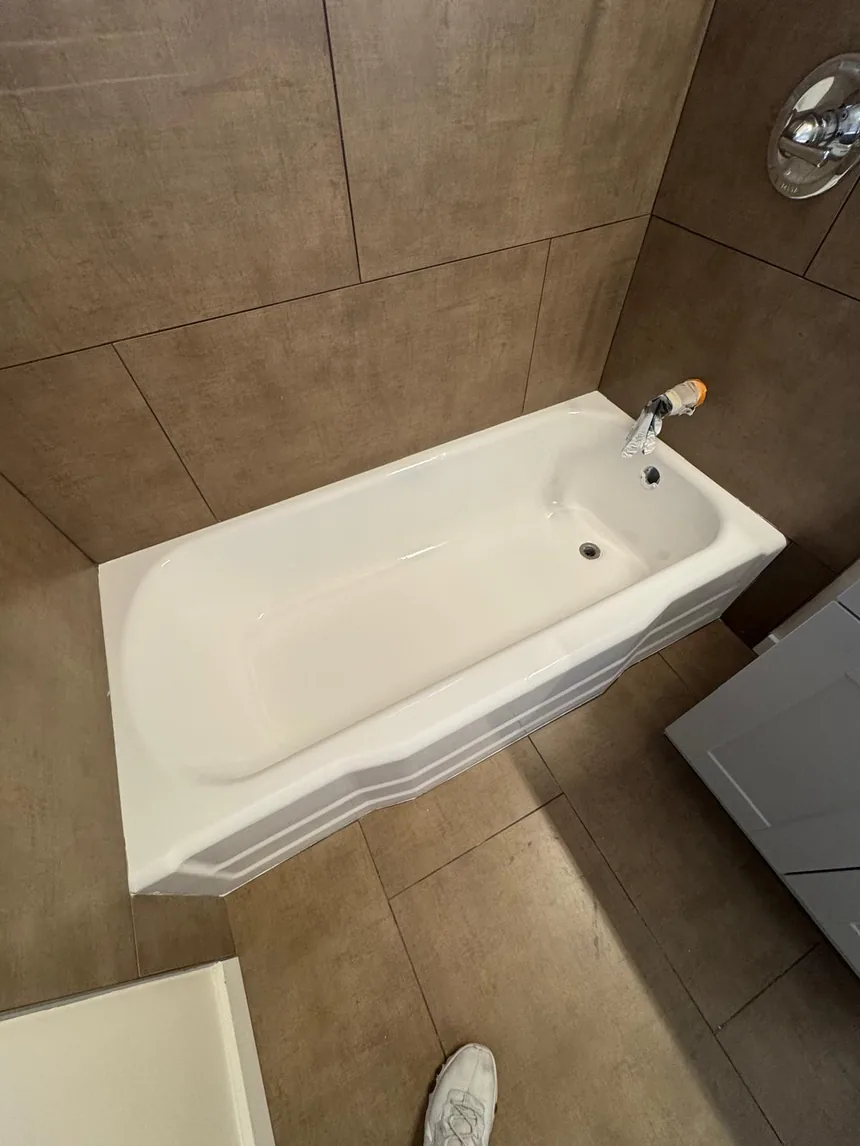
Almost everyone who calls us about rust has already tried to clean it off. That is the natural thing to do, and it is the reason the problem is so often misunderstood. Rust in a bathtub is not sitting on the surface waiting to be lifted. It is metal corroding underneath the surface, and what you can see is only where it has broken through.
How it starts
Most older tubs in Los Angeles are steel or cast iron with a layer of porcelain glaze fused to the top. The glaze is glass. Glass does not rust, and as long as it is unbroken the metal underneath never meets water.
Then something breaks it. A dropped shampoo bottle, a shower door track, decades of scouring powder wearing it thin, or a drain fitting that was overtightened twenty years ago. Water finds the gap, sits against bare metal, and corrosion begins. From that moment the surface is no longer the thing protecting the tub — it is the thing hiding what is happening to it.
Why it always spreads
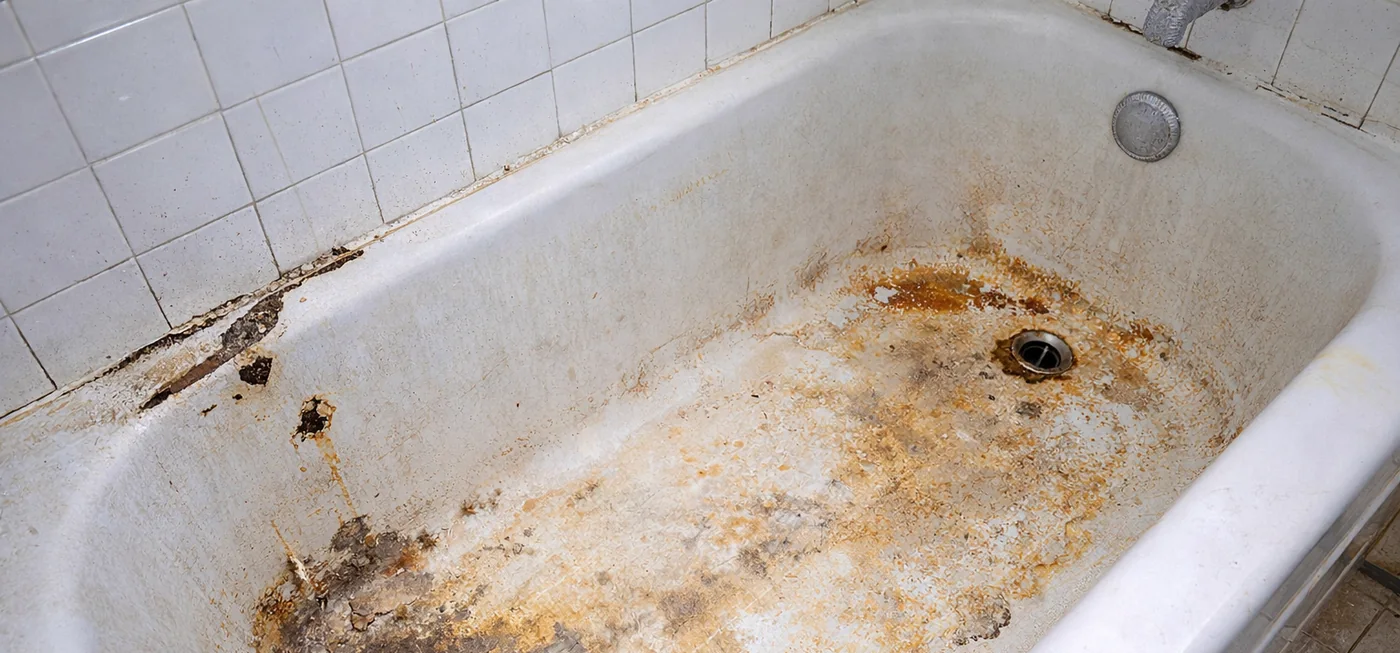
This is the part that surprises people. Rust occupies more space than the metal it came from. As it forms under the glaze it pushes upward, and the glaze — which is hard but brittle, and bonded to metal that is now swelling — lifts at the edges and cracks away.
That exposes more metal. More metal rusts. The patch grows outward at a pace you can measure in months, and it grows from the edges, not from the middle. It is why a stain that looked like a coin in January can look like a handprint by summer, and why scrubbing it makes it faster: you are taking off the glaze that is still holding.
What does not work
- Bleach. It lightens the color of the stain for a few days. It does nothing to the corrosion, and it keeps the area wet while you work on it.
- Rust removers. They are formulated for rust deposits left on a surface by iron-rich water — the orange ring under a dripping faucet. That kind genuinely does wipe off. Rust coming through the tub does not, because the source is on the other side.
- Abrasive pads and powders. These work by sanding. Every pass removes a little more of the glaze at the edge of the damage, which is exactly where you need the glaze to stay.
- Painting over it. Any coating applied over active corrosion fails, usually within weeks, and it fails by lifting in sheets. The coating was never the problem. We wrote about that at length in why refinishing peels.
There is one way to tell the two kinds apart in about ten seconds. A surface deposit will shift, even a little, with a damp cloth and a non-abrasive cleaner. Rust coming through will not change at all, and the area around it will feel slightly rough or raised where the glaze is lifting.
The two places it hides
Rust rarely starts in the middle of a tub. It starts where water sits and where the glaze was interrupted by a hole someone drilled.
- Around the drain. The drain is a cut edge in the glaze with a metal fitting screwed through it. If the seal has gone, water has been wicking under the surface from below, and the stain you can see is the late stage of something that started underneath.
- At the overflow plate. Same story, and worse, because nobody dries it. Take the plate off and look behind it before you decide whether a tub is worth saving.
Neither of those is a plumbing job for us — we do not do plumbing and we say so plainly — but both are worth checking before anyone quotes you for a surface.
How it is actually repaired
The sequence matters more than the materials, and it has one rule: the corrosion has to be gone before anything is applied over it.
- The damaged area is ground back to clean, bright metal. Not cleaned — ground.
- Everything loose around the edge comes off, which means the bare area ends up larger than the stain was.
- The void is filled and cured, then sanded flat so there is no step.
- The whole tub is cleaned and etched, so the new coating has something to grip.
- Then it is sprayed, in one color, in one visit.
That is the whole reason a proper job takes three to five hours and a bad one takes forty minutes. Almost all of the time is in the first three steps, and they are the ones you cannot see once it is finished.
When a rusted tub is past saving
We will tell you when it is, because sending you a bill for a surface that is going to fail helps nobody.
The honest test is whether there is sound metal left to work with. On cast iron there almost always is — it is thick, and even heavy surface corrosion is shallow relative to the casting. On a thin steel tub, if you can flex the floor with your hand, or there is a pinhole you can see light through, the shell has failed and no finish will bridge it. That is a replacement, and replacing a tub means opening the wall and the floor, not just the tub.
Short of that, rust is one of the most routine things we deal with. It is also one of the few problems in a bathroom that genuinely gets worse and more expensive the longer it is left, because the damage spreads under a surface that looks fine right up until it does not.
We work across Los Angeles, Orange and San Bernardino counties, and the estimate is free. If the answer is that your tub has gone too far, that is what we will say.