
Repairs · 8 min read
A chipped bathtub: what you can fix and what you shouldn't try
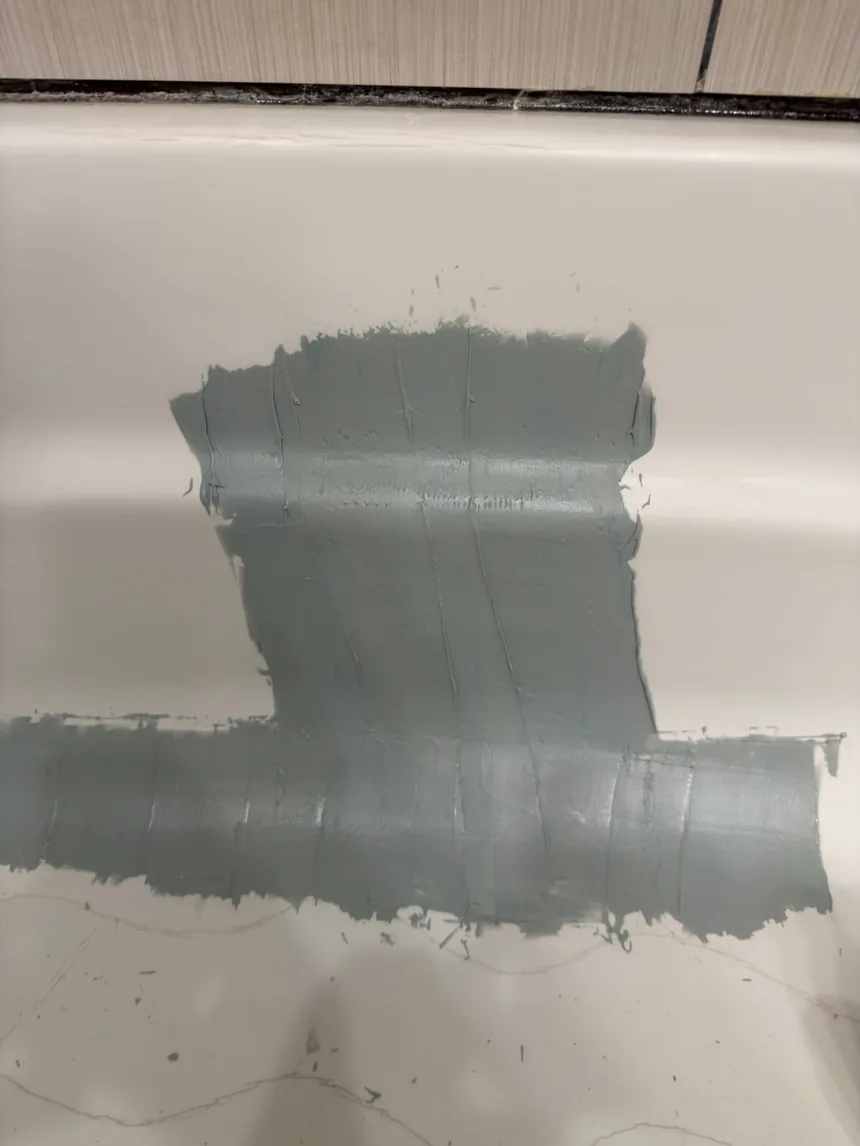
A chip looks like a cosmetic problem. It is not. The glaze on a bathtub is the only waterproof layer it has, and a chip is a hole straight through it. What happens over the following months depends entirely on what is sitting underneath that hole.
What is under the chip decides everything
Three materials cover almost every tub in Southern California, and a chip behaves differently in each one.
- Porcelain over steel. The most common tub in houses built from the 1940s through the 1970s. The porcelain is glass fused to a thin steel shell. Chip the glass and you have exposed bare steel to standing water. It starts rusting almost immediately, and because the rust forms under the edge of the remaining glaze, it lifts more glaze as it grows. A chip the size of a dime becomes a stain the size of a hand.
- Porcelain over cast iron. Same glaze, far thicker metal. It rusts too, but it has a lot more metal to lose, so you get a slow brown halo instead of a fast-spreading failure. Cast iron is also the material most worth saving, which is the subject of its own article.
- Fiberglass and acrylic. No metal, so no rust. The problem here is different: the colored layer is thin, and below it the material is porous. Water gets in, works along the laminate, and the area around the chip goes soft and flexes underfoot. You cannot see that from the surface, which is why a small chip in a fiberglass tub sometimes matters more than a bigger one in steel.
If you do not know which one you have, the tests for telling them apart take about a minute and need nothing but a magnet.
The repair kits from the hardware store
They exist, they are cheap, and they are not useless. Used on the right chip they will keep water out, which is the thing that actually matters. Being honest about them is more useful than pretending otherwise, so:
- They stop the water. That alone can be the difference between a chip and a rust bloom, and a sealed chip is better than an open one every time.
- They will not disappear. The filler cures to a flat or semi-gloss finish beside a surface that is high gloss, and the white in the bottle is almost never the white of your tub. In good light you will see the patch from the door.
- They do not stick to a dirty or wet surface. Most kit repairs that fail within a month failed because nobody degreased and dried the area first. Soap film is invisible and it is enough.
- They cannot fix what they cannot reach. If rust has already crept under the surrounding glaze, filling the visible hole seals the rust in and it keeps going underneath.
So a kit is a reasonable answer to a fresh chip in a tub you are otherwise happy with, somewhere that is not in your eyeline. It is not an answer to a chip that has already started staining.
What we do differently, and why it costs more
The repair itself is not the expensive part. The preparation is.
We grind the damage back until there is nothing loose or rusting left, which almost always means the hole gets bigger before it gets smaller. Then the area is filled, cured, and sanded flat against the surrounding surface so there is no step to catch the light. Then the whole tub is etched and coated, so the repair is under one continuous finish rather than sitting on top as a patch.
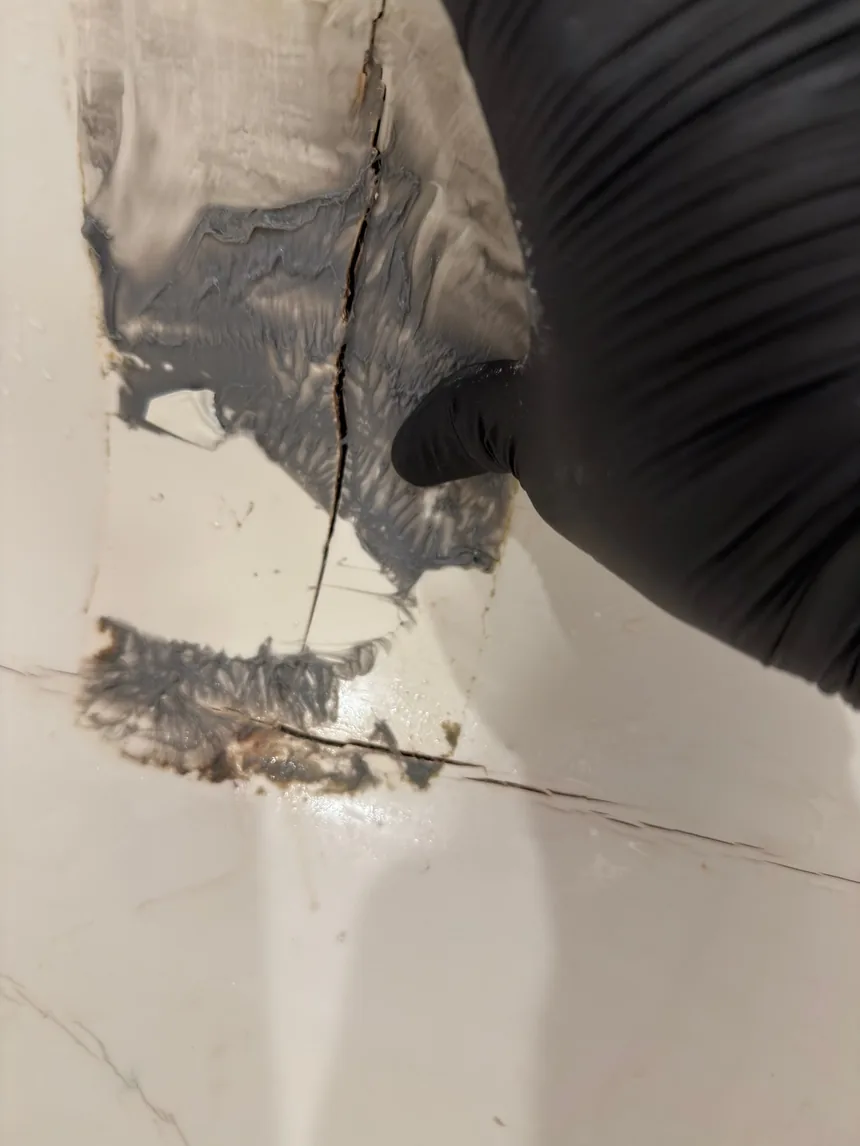
That last part is the real difference. A kit gives you a repaired chip in an old tub. Refinishing gives you a tub with no chip in it, because the repair is no longer a separate thing — it is under the same coating as everything else. It is also why we can put a five-year written warranty on residential work: we are not warranting a patch, we are warranting a surface.
When a chip means the whole tub
Repair the chip on its own when it is fresh, small, the surrounding glaze is sound, and the rest of the tub still looks the way you want it to.
Do the whole tub when any of this is true:
- There is a brown halo around the chip. The rust is already under the glaze.
- There is more than one chip, or a chip plus general dullness.
- The chip is in the floor of the tub, where it gets weight and standing water.
- You already dislike the color. Fixing a chip in a tub you are going to resurface anyway is work done twice.
- You are turning the unit over for a tenant and need it to read as new, not as repaired.
For a rental that last point tends to settle it on its own, and we wrote separately about what that looks like between tenants.
Three things that make it worse
- Abrasive cleaner on the chip. Scouring powder takes the edges of the remaining glaze with it and widens the hole.
- Nail polish or household epoxy. Neither is made for constant immersion. They lift, and when they lift they bring glaze.
- Waiting out a drip. A faucet that drips onto a chip keeps the metal wet twenty-four hours a day. Fixing the drip is cheaper than anything on this page.
The short version
A chip is a hole in a waterproof layer. Seal it quickly and you have bought yourself years. Leave it open on a steel tub and the clock starts running, because the rust spreads under the glaze where you cannot see it. And if it has already started, filling the hole does not stop it — the damage has to be ground out first, which is a different job.
We cover Los Angeles, Orange and San Bernardino counties out of Bellflower, and we will tell you if a chip is one you can handle yourself. Saying so costs us a job and keeps us honest, which is the trade we would rather make.