
How it works · 7 min read
How to tell what your bathtub is made of, in about a minute
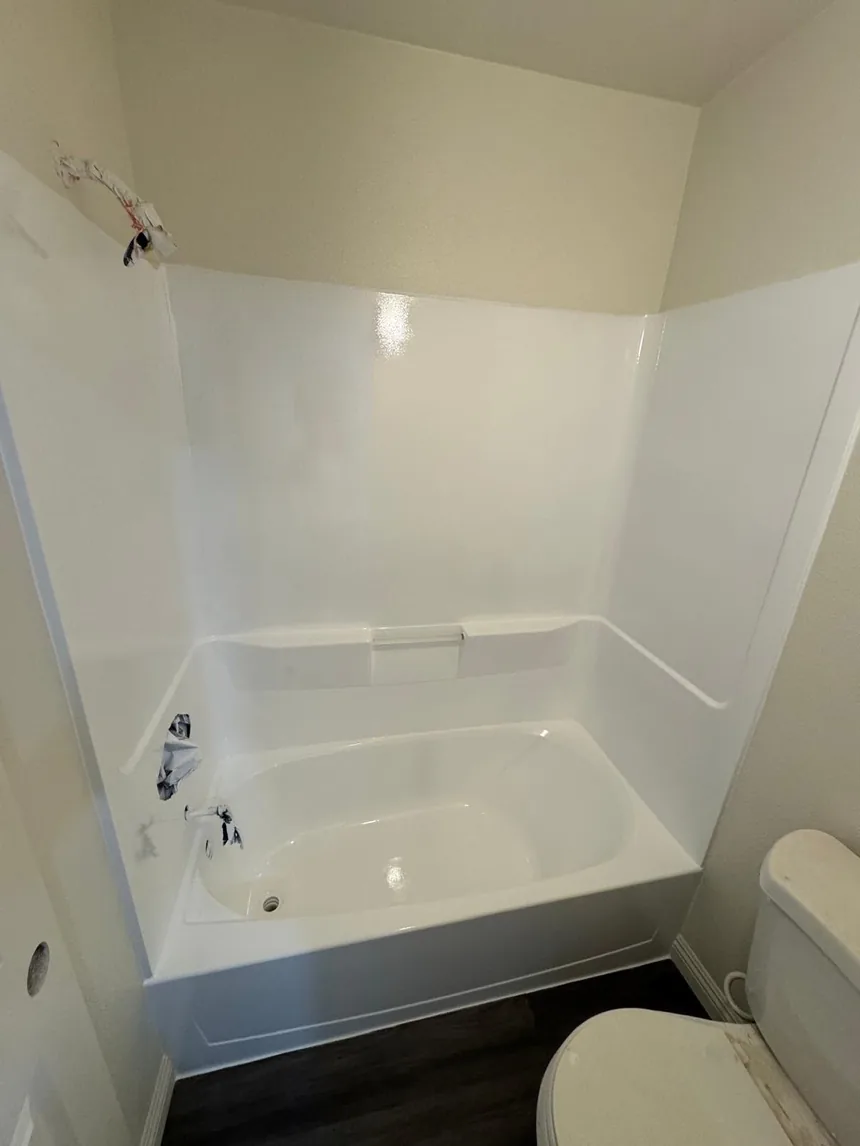
Nearly every question about a bathtub has a different answer depending on what the tub is made of. How long a finish will last on it, whether rust is a risk, whether it can take weight, whether replacing it means two people or four. And most people genuinely do not know which one they have, which is reasonable — it is not information anyone needs until suddenly they do.
Four tests, none of which require tools you do not already own.
1. The magnet
Take a fridge magnet and hold it against the inside wall of the tub, a few inches above the floor.
- It sticks: the tub is metal. Steel or cast iron.
- It falls off: fiberglass, acrylic, or one of the cultured stone materials.
That single test splits every tub in Southern California into two groups, and it is the split that matters most, because only one of those groups can rust.
2. The knuckle
If the magnet stuck, tap the side wall of the tub with a knuckle.
- A dull thud, and nothing moves. Cast iron. It is dense enough that it absorbs the sound rather than ringing.
- A tinny ring, with a little give. Pressed steel. The shell is thin, and you can usually feel it flex very slightly under a firm push.
If the magnet fell off, tap it anyway. Fiberglass and acrylic sound hollow and plasticky, and the floor often has noticeable flex when you step into it — which, in an older unit, is worth paying attention to.
3. The rim and the chip
Look at the top edge of the tub, and at any chip you can find.
- A thick, slightly rolled edge, and a chip that shows dark gray metal: cast iron. The porcelain is thick and the break is sharp, like broken glass.
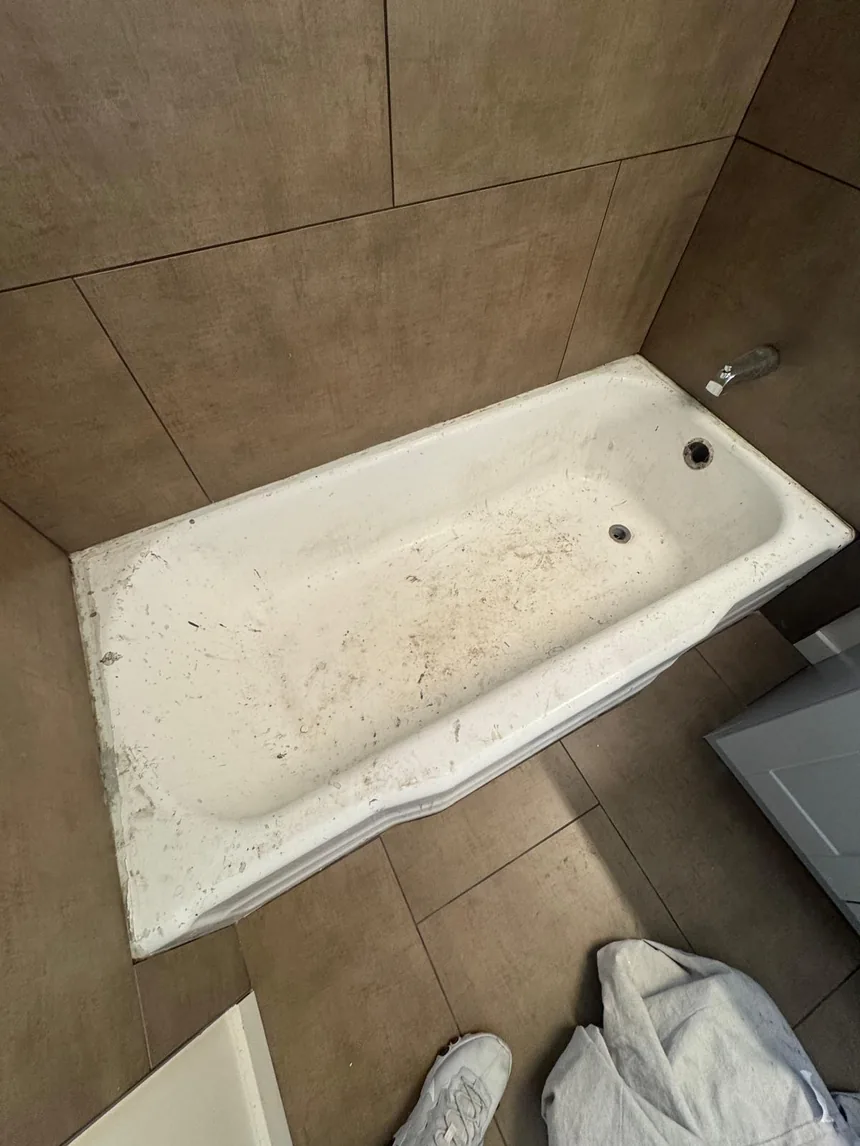
- A thin, square edge and a chip showing bright silver or rust orange: steel.
- A chip that shows white or off-white all the way down, with a fibrous or chalky look: fiberglass. You may be able to see the weave.
- A chip where the color continues all the way through: acrylic. Acrylic is colored throughout, not coated, which is why a scratch in acrylic is far less visible than a scratch in anything else.
4. The surround
Stand back and look at where the tub meets the wall.
If the tub and the walls are visibly one continuous piece with no seam and softly rounded corners, you have a one-piece molded unit, and it is fiberglass or acrylic. These went into apartments and tract housing from the 1970s onward and they are extremely common in rentals and condos. If there is a grout line or a caulk joint where the tub meets tile, the tub is a separate object and is more likely to be metal — though not always.
What the answer changes
Once you know, the rest of the advice stops being generic.
- Cast iron. Heavy, long-lived, and the single best candidate for refinishing there is. The shell outlasts several finishes, so you are renewing a surface on something structurally excellent. Removing one is a genuinely disruptive job, which is why almost nobody does.
- Steel. Also refinishes well, but rust is a live concern because the metal is thin. Chips matter more and they matter sooner. If the floor flexes and there is a pinhole, the shell is finished.
- Fiberglass. Refinishes well and is very often worth doing, because the alternative is replacing a one-piece unit, and a one-piece unit does not come out through the bathroom door. The prep is different: it is porous, it flexes, and it needs a bonding approach suited to that.
- Acrylic. Similar to fiberglass for our purposes. Scratches are less visible because the color runs through, but a dull, crazed acrylic surface does not polish back, and that is when people call.
The two that confuse everybody
Two materials come up often enough in Southern California bathrooms to be worth naming, because neither behaves like the four above.
- Cultured marble. Common on vanity tops and integrated sinks from the 1970s and 1980s, and occasionally on tub decks. It is a resin and stone-dust casting with a clear gelcoat over the top, and the giveaway is a swirled, veined pattern that is slightly too regular to be stone. No magnet, no ring, and when the gelcoat wears off it goes chalky and yellow rather than chipping. It refinishes well, and it is usually the reason a bathroom looks dated even when the tub is fine.
- Enameled steel that somebody has already coated. Not a different material, but it reads as one. A magnet still sticks and a chip shows white over color rather than white over metal. If you find that, the tub has been refinished before, and that changes the next job quite a lot.
A rough guide by decade
This is housing-stock knowledge rather than a rule, but across the neighborhoods we work in it holds up more often than not.
- Before 1950: cast iron, very often with feet, and usually worth keeping.
- 1950s to early 1970s: porcelain over steel set into a tiled alcove. This is the single most common tub in the older parts of Bellflower, Downey and Lakewood, and it is the one that comes in pink, green, blue and yellow.
- Mid 1970s onward: one-piece fiberglass or acrylic units, especially in apartments and anything built as a rental.
If you are in a 1950s bathroom and the color is the problem rather than the condition, that has its own article, because those bathrooms are often in better shape than their owners think.
If you would rather not guess
Send us a photo of the tub and a close one of the rim. We have been doing this across Los Angeles for ten years and we can usually name the material and the decade from two pictures, which is quicker than anyone crawling around with a magnet.